Booking choice: The private walking tour, from $203 for 1 adult, total varies by group. Check dates Tour details
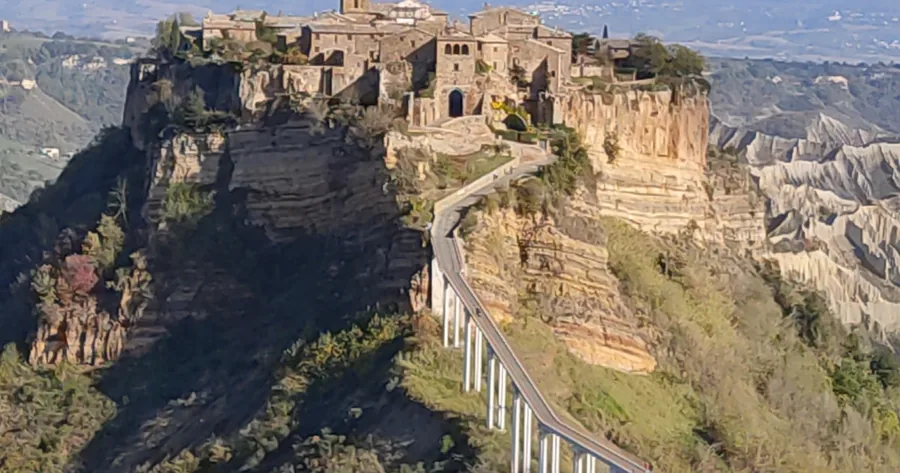
The Etruscans settled this ridge more than 2,500 years ago, on a route between the Tiber and Lake Bolsena. The town was once larger, with a cathedral and five gates. Earthquakes and landslides cut it down, above all the earthquake of 1695, which destroyed the cathedral and the strip of land joining Civita to Bagnoregio, according to Italia.it. The bishop's seat moved to Bagnoregio and the village shrank to the few streets you see now, with about a dozen permanent residents.
The sights below follow the town's own list of places to visit in Civita, with details from Wikipedia (English and Italian) and opening hours checked on 10 October 2026.
The quick answer
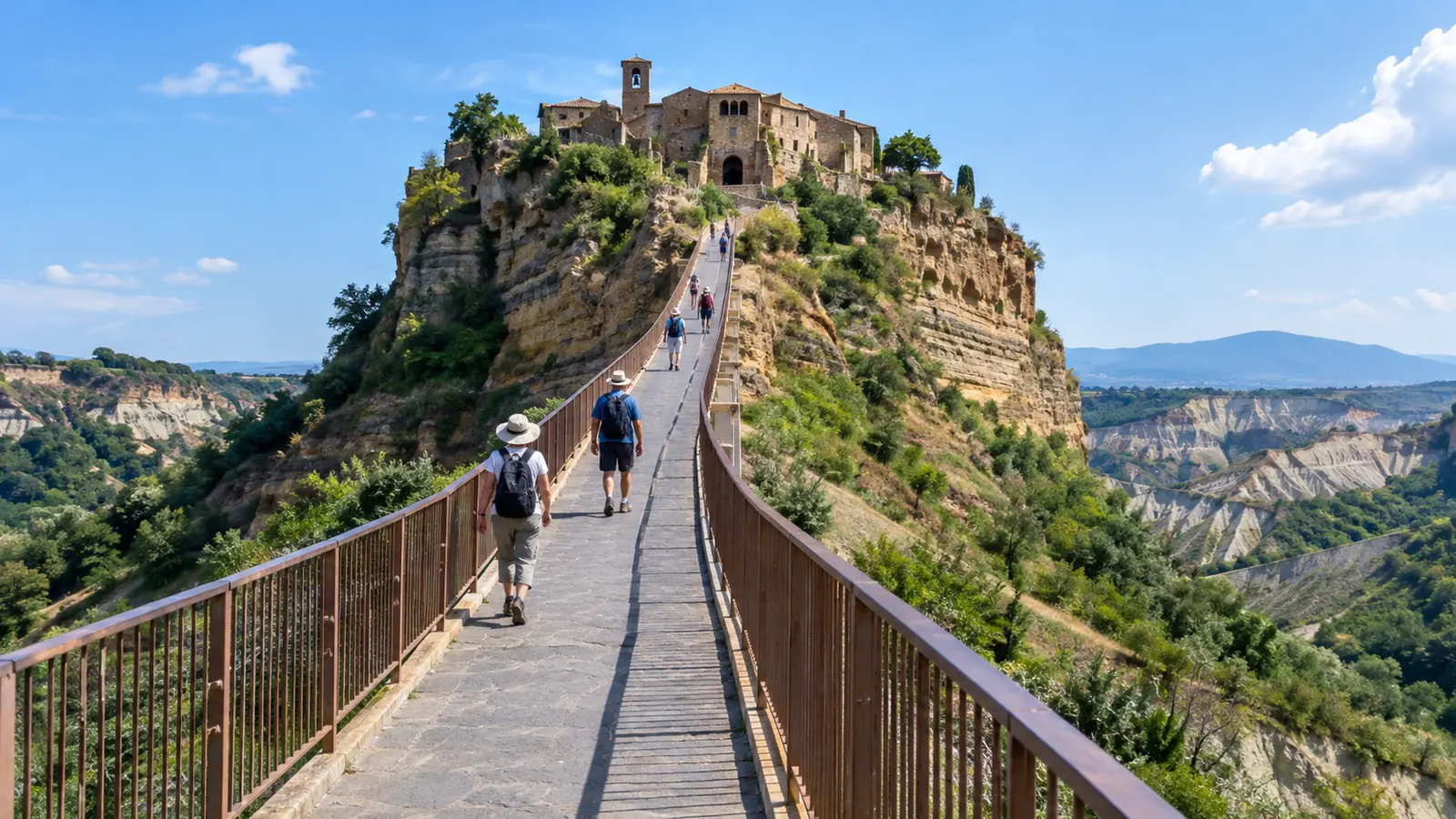
Cross the bridge to the Porta Santa Maria with its two lions, walk to Piazza San Donato and see the wooden crucifix in the church, then follow the main street to the far end for the views over the calanchi. Add the geology and landslide museum (weekends outside summer), a cave or two, and the Belvedere in Bagnoregio for the classic view. Allow two to three hours.
How long do you need, and what is the route?
Two to three hours. Walk in through the gate, across the square, to the far end and back, then save time for the Belvedere view.
There is only one way in and one way out, and that makes the route simple. From the Porta Santa Maria the main street runs straight to Piazza San Donato, then continues east towards the tip of the ridge, where the lanes end at gardens and viewpoints over the badlands. Side lanes drop off on both sides to caves, cellars and the remains of houses that fell into the valley.
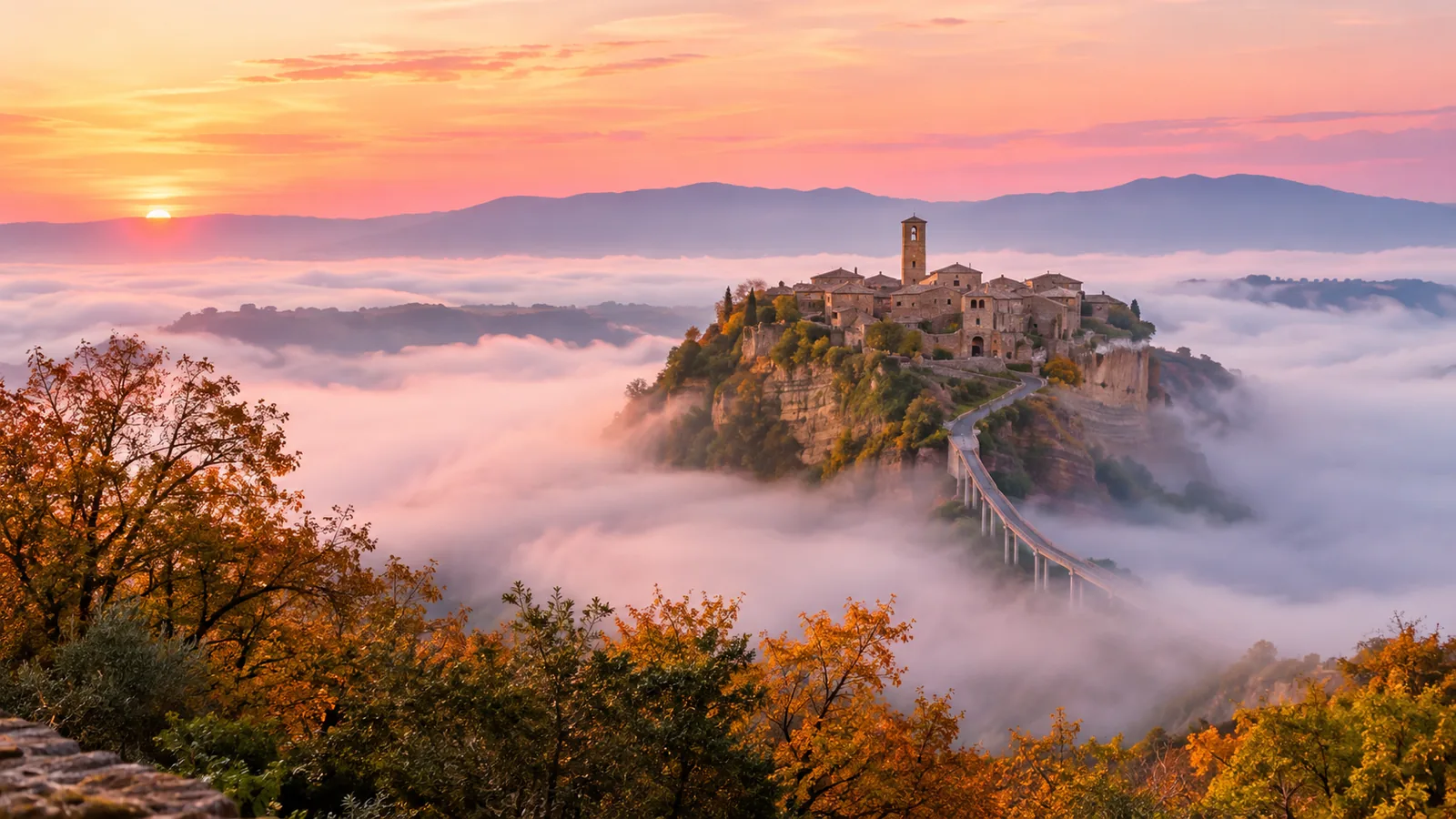
Two hours covers the essentials at an easy pace. Add an hour for lunch inside the village and another for the museum. The best single view is not inside Civita at all: it is from the Belvedere in Bagnoregio, where the whole rock appears with the bridge leading up to it. See it on the way in and again on the way out, because the light changes.
| Stop | Time | Cost |
|---|---|---|
| Belvedere in Bagnoregio (the classic view) | 10 to 15 min | Free |
| Footbridge to Porta Santa Maria | 10 to 15 min | €5 entry |
| Piazza San Donato and the church | 20 to 30 min | Free |
| Museo Geologico e delle Frane | 30 to 45 min | About €3; limited days |
| Main street to the eastern tip and viewpoints | 20 to 30 min | Free |
| Caves and cellars open to visitors | 10 min each | A coin or two |
| Lunch or a drink in the village | 45 to 60 min | Varies |
What is special about the Porta Santa Maria?
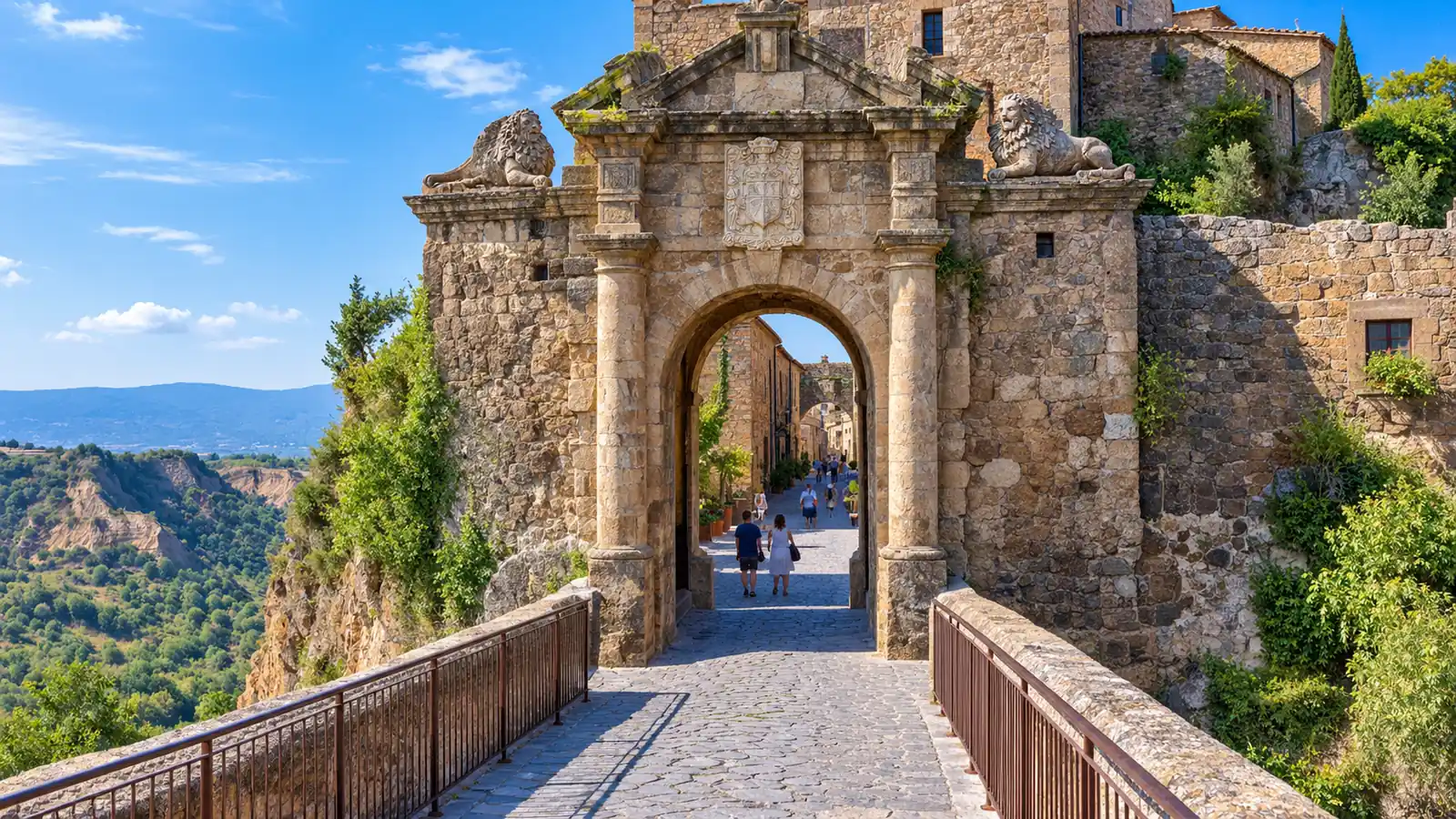
It is the only surviving gate: Etruscan in origin, with a Gothic arch and two lions holding human heads.
The gate was first cut into the tuff by the Etruscans, which is why it is also called Porta Cava, "the cut gate". A Gothic arch was added in the Middle Ages, and it took its name from a nearby church of the Madonna. On the town's page about the gate you can read the story behind the two basalt lions on the walls, each gripping a human head in its claws.
They commemorate a revolt. In 1457 the people of Civita rose against the Monaldeschi, the Orvieto family that had ruled them and turned protection into domination, and destroyed their castle at Cervara. Look also for crosses carved inside triangles in the walls, which local tradition links to crusaders returning from the Holy Land. Stand on the bridge side of the gate and you are looking at the only original entrance left: the town once had several, and the cliff took the rest.
What is inside the church of San Donato?
A wooden crucifix of the Donatello school, whose expression seems to change as you walk past it, and Etruscan sarcophagi in the bell tower.
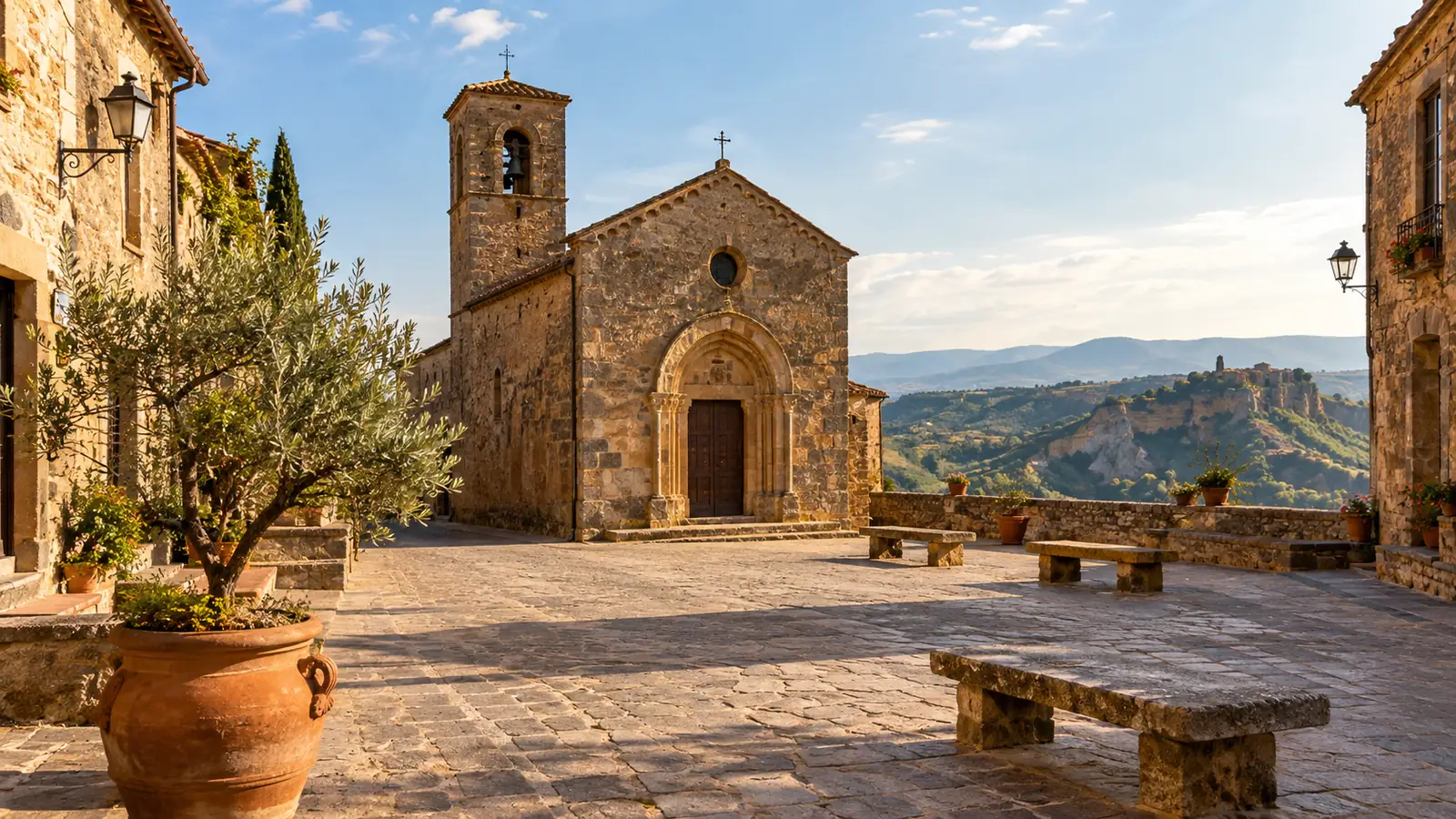
San Donato faces the old town hall across the main square and is the only church left in the village. The building goes back to the 5th century, with a Romanesque core and a Renaissance front. It was Civita's cathedral until the 1695 earthquake damaged it so badly that the see moved to San Nicola in Bagnoregio, today the co-cathedral.
The thing to see is the 15th-century wooden crucifix, attributed to the school of Donatello. The town's description puts it well: seen from the left, Christ still seems to be in agony; from the right, he appears to be in the sleep of death. Walk slowly past it and watch. On Good Friday the crucifix is carried in procession to Bagnoregio. The bell tower holds two basalt Etruscan sarcophagi.
The square around it is where the Palio della Tonna, the donkey race, is run twice a year. On an ordinary day it is the place to sit on the stone benches and watch the village. Most groups gather here, so walk on and come back when they have left.
Is the geology and landslide museum worth it?
Yes, for half an hour, if it is open: it explains why the rock is crumbling. Outside summer it opens only Friday to Sunday.
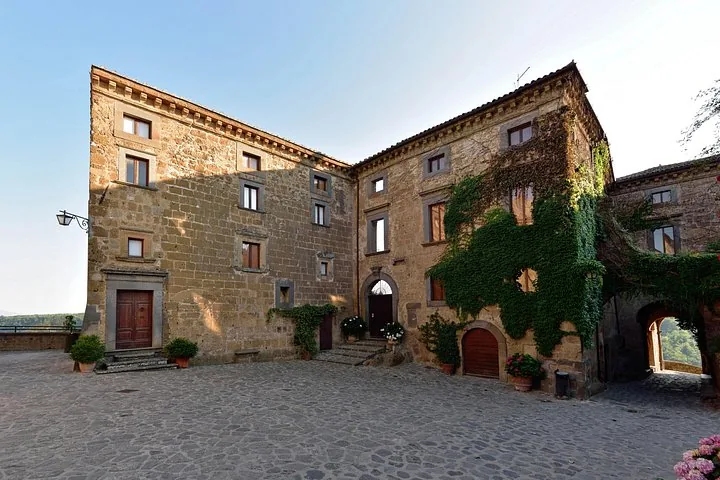
The Museo Geologico e delle Frane occupies the second floor of Palazzo Alemanni on Piazza San Donato. It covers the geology of the area (an ancient sea more than a million years ago, then the volcanoes of the Vulsini district that laid down the tuff), how the slopes fail, and how engineers monitor and stabilise them. There are fossils and interactive rooms that work for children.
Opening hours are the catch. From June to August it opens Tuesday to Sunday, 9:30 to 13:30 and 14:00 to 18:30. From September to May it opens only Friday to Sunday, 10:00 to 13:30 and 14:00 to 17:30, and on some holidays. It is closed on 24, 25 and 31 December and 1 January (museum hours). For the background, the erosion and UNESCO post covers the works on the cliffs.
| Period | Days | Hours |
|---|---|---|
| 1 June to 31 August | Tuesday to Sunday | 9:30-13:30, 14:00-18:30 |
| 1 September to 31 May | Friday to Sunday | 10:00-13:30, 14:00-17:30 |
| Tuesday to Thursday, September to May | Groups of 15 or more, booked | On request |
| Extra openings | 6 Jan, Easter Monday, 25 Apr, 1 May, 26 Dec | Holiday hours |
| Closed | Mondays; 24, 25, 31 Dec; 1 Jan | n/a |
What about the caves, St Bonaventure and the Bucaione tunnel?
The caves and cellars are the fun part. Bonaventure's house is a ruin you see from a distance, and the Bucaione tunnel is closed.
Civita's rock is full of holes. Many houses have Etruscan chambers below them, used over the centuries as tombs, cellars, stables and olive presses. Several open their doors for a small coin; GetYourGuide guest Kelly wrote in October 2026: "when you're in the city go visit the caves for 1 euro!" The chapel of the Madonna del Carcere is a small cave chapel that the town describes as all that remains of the Carcere district, which slid into the valley; it began as an Etruscan tomb and later housed shepherds and their animals (town page).
St Bonaventure, the Franciscan theologian who died in 1274, was born here. His house survives only as a ruin in a far corner of the village; the iron stair that led to it is closed because it hangs over the void (town page). The Grotta di San Bonaventura, an Etruscan chamber tomb where tradition says St Francis healed the boy, is by the Belvedere in Bagnoregio.
The Bucaione is a deep tunnel through the lower village to the valley floor, widened from a Roman aqueduct for carts and used as a shelter in the Second World War. The town lists it as currently not accessible. Do not plan a walk into the valley through it.
| Sight | Status (October 2026) | Notes |
|---|---|---|
| Private caves and cellars | Open on many days | Usually a coin or two |
| Chapel of the Madonna del Carcere | Visible | Etruscan tomb turned chapel |
| St Bonaventure's house | Ruin, stair closed | Seen from a distance |
| Grotta di San Bonaventura | Open access | By the Belvedere in Bagnoregio |
| Bucaione tunnel | Not accessible | Listed as closed by the town |
Should you see Civita with a guide?
If you want the stories behind the stones, yes: a local guide or a group tour's guide adds what the signs do not.
There is little signage in the village, and most of what makes it interesting, the Etruscan tombs under the houses, the revolt behind the lions, the houses that fell, is invisible unless someone points it out. The private walking tour ($203 for one adult, total varies by group, 5.0 from 8 reviews) gives you three hours with a local guide, entry included, starting from Caffè Belvedere on Piazza Alberto Ricci. Tim wrote in May 2023: "Floriana was a fantastic guide and was very knowledgeable about the area!"
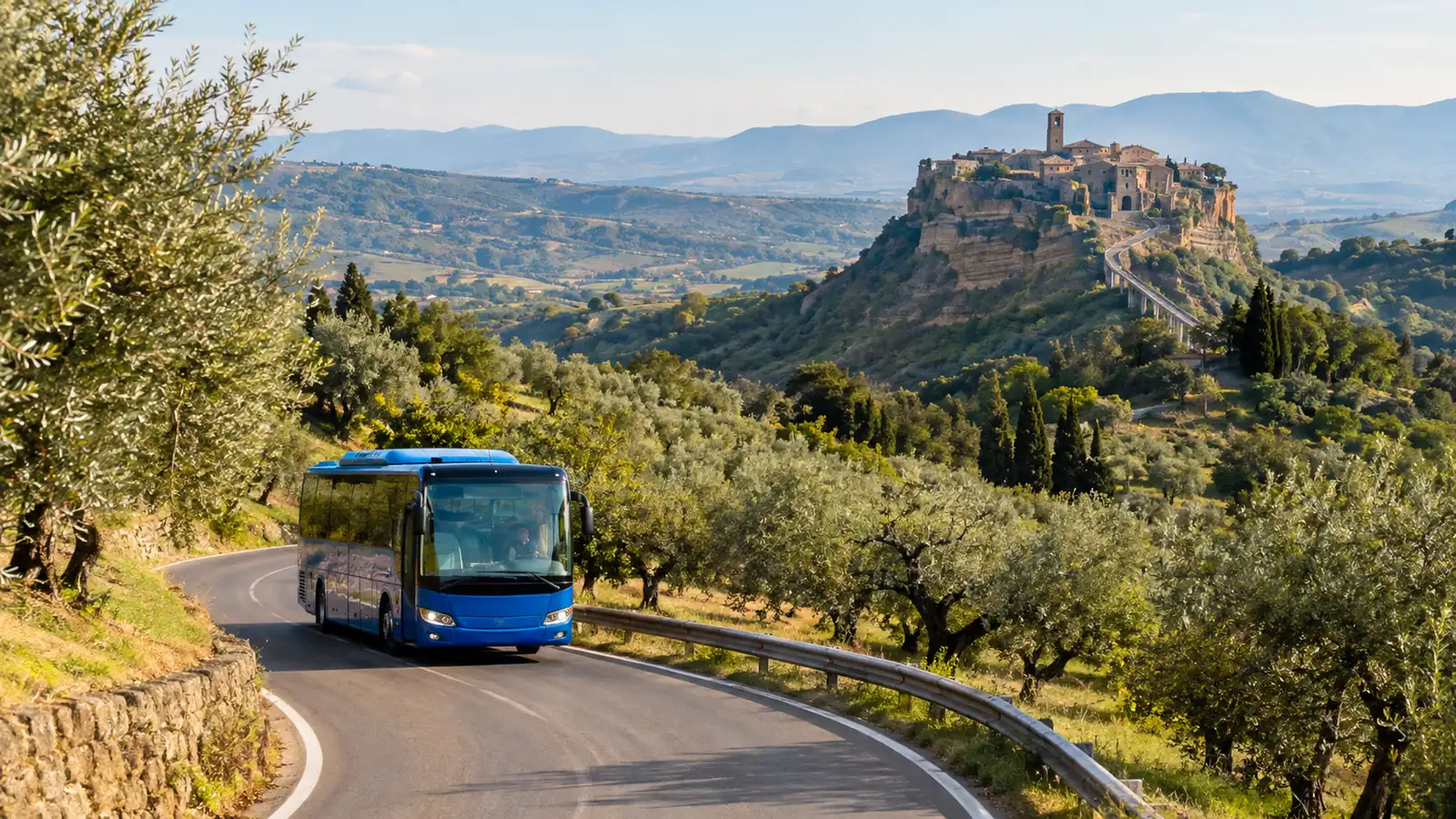
On a day trip from Rome, the City Wonders and Tour Guy trips include a guide in Civita. On a budget, the town's Civita di Bagnoregio app has audio guide content, and the GetYourGuide ticket ($17) bundles an audio guide with entry. Our pick for anyone arriving by car: the private walking tour first thing in the morning, then lunch in the village.
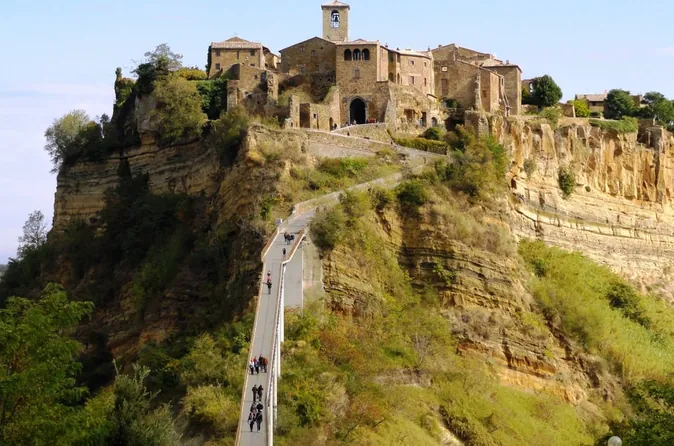
Three hours in Civita with a local guide, just for your group, with entry included.
Check dates Tour detailsFrequently asked questions
How long does it take to see Civita di Bagnoregio?
Two to three hours, including the bridge, the square, the church and the views. Add an hour for lunch and another if the museum is open.
Is the church in Civita di Bagnoregio free?
Yes. San Donato on the main square is free to enter. It holds the wooden crucifix carried in the Good Friday procession.
Can you go into the caves in Civita?
Several private caves and cellars open to visitors for a small coin. The Bucaione tunnel to the valley is closed.
Is Civita di Bagnoregio a UNESCO World Heritage Site?
No. The Cultural Landscape of Civita di Bagnoregio is on Italy's tentative list and Italy put it forward as a candidate in 2021, but it has not been inscribed.
Ready to book
Book your visit
Free cancellation up to 24 hours before on every option. Prices are from-prices in USD and move with the season.
Civita di Bagnoregio Private Walking Tour
A local guide in Civita when you arrive by car
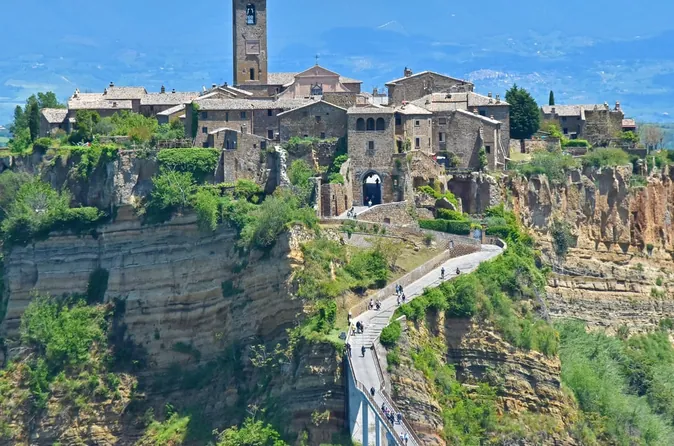
Skip-the-Line Ticket to Civita di Bagnoregio
Arriving on your own, ticket ready on your phone
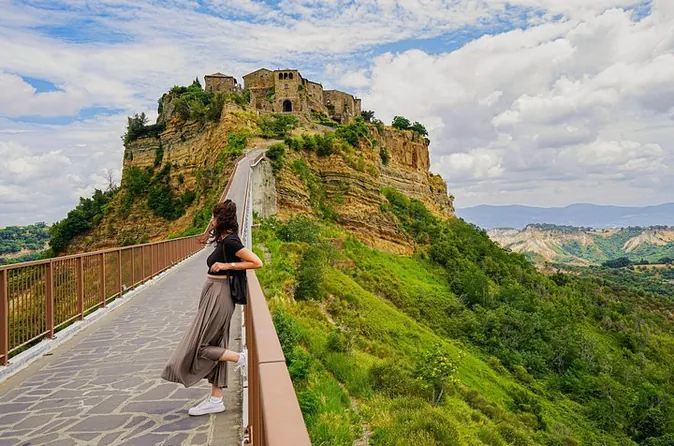
Civita & Orvieto Day Trip from Rome with Wine Lunch
- Coach from Rome and back, with a guide all day
- About 2 hours in Civita di Bagnoregio
- Three-course farmhouse lunch with five wines