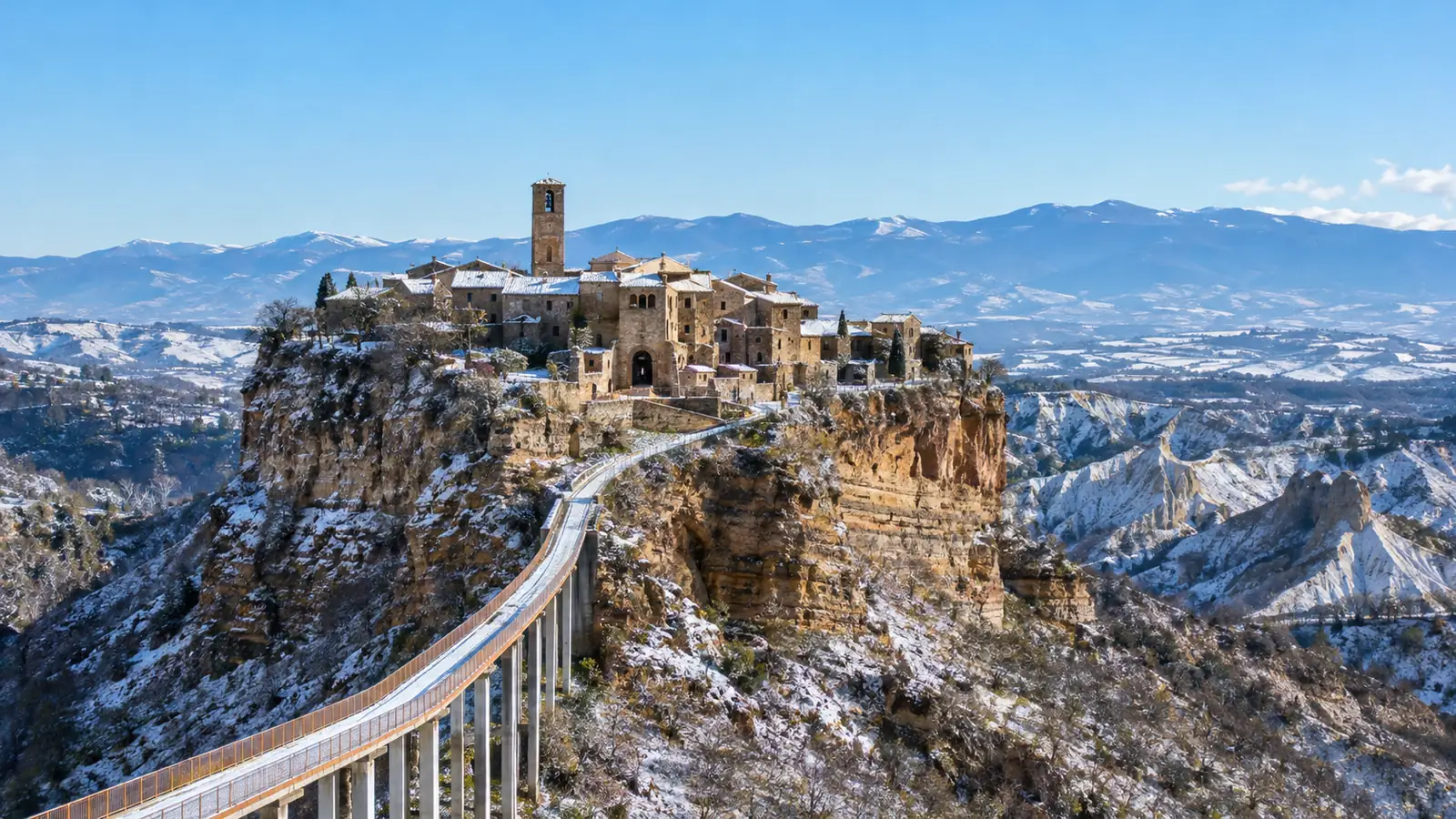
A 2,500-year-old village on a crumbling pinnacle of tuff, reached by one long footbridge. Day trips from
Rome, the €5 entry ticket and local guides, compared honestly.
The €5 ticket, explainedTown price, online platforms, what tours include
Two platforms, one comparisonGetYourGuide and Viator side by side
Free cancellationUp to 24 hours before, on every tour here
The steep part, said plainlyThe bridge, the walk and who will find it hard
Tours
Choose your Civita day
In the centre, the most booked day trip from Rome. Either side, a three-town marathon and a shorter day with
a Renaissance garden. Every card opens a full page.
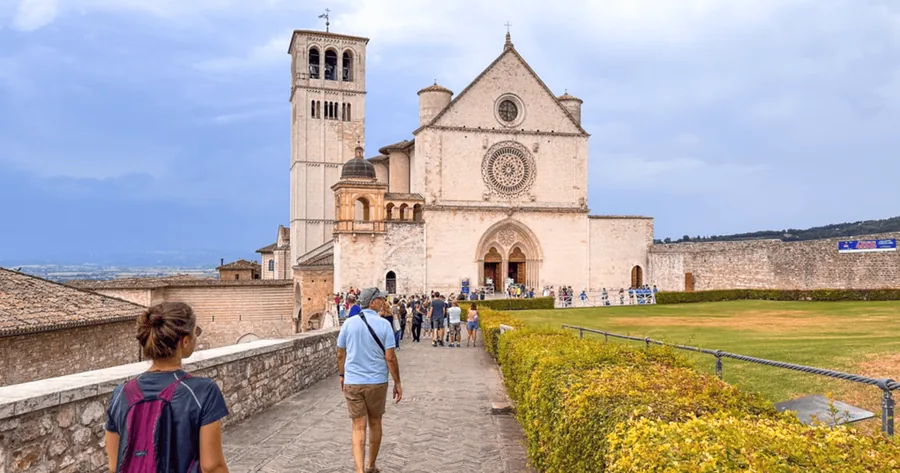
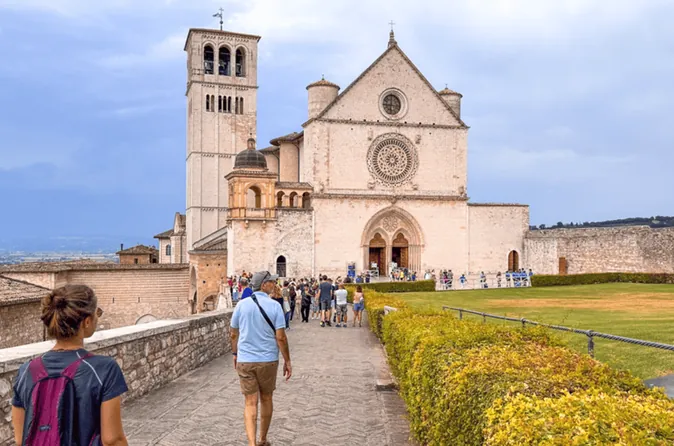
Three hill towns in one very long day: St Francis's Assisi, Civita and Orvieto, by coach from Rome with a tour leader. Best for travellers who will not be back in central Italy soon.
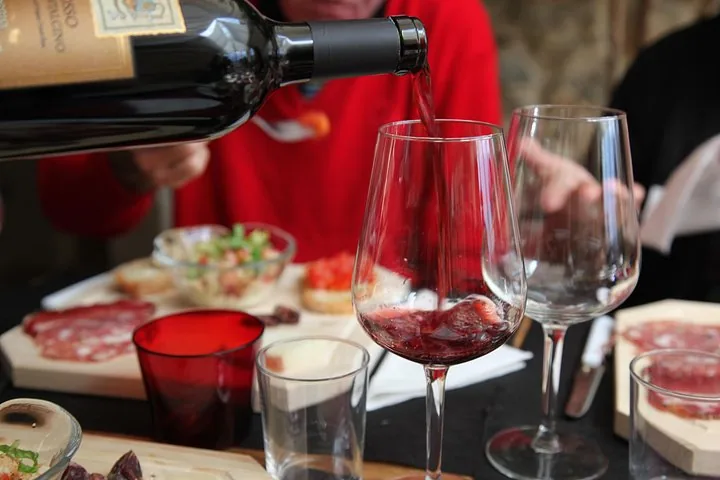
The most reviewed way in from Rome: about two hours in Civita with a guide, a Tuscan farmhouse lunch with five wines near Montepulciano, then free time in Orvieto. A long day, but no buses or parking to sort out.
Civita ticket includedRenaissance gardenShorter day
A calmer day: Villa Lante's Renaissance water garden at Bagnaia, then Civita, back in Rome in about seven and a half hours. Both entry tickets are included.
The town's own entry ticket costs €5 per person in 2026 (children under 6 free), online or at the ticket
office. Tour prices are from-prices in US dollars; private tours are priced by group size.
Before you book
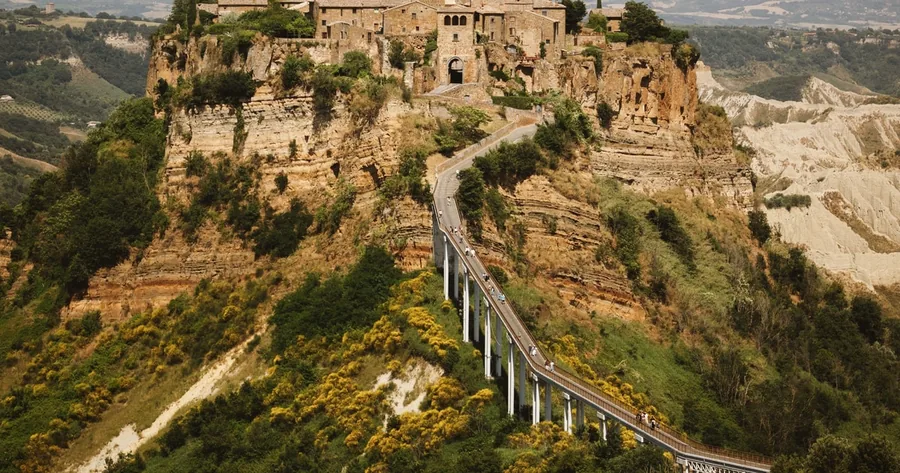
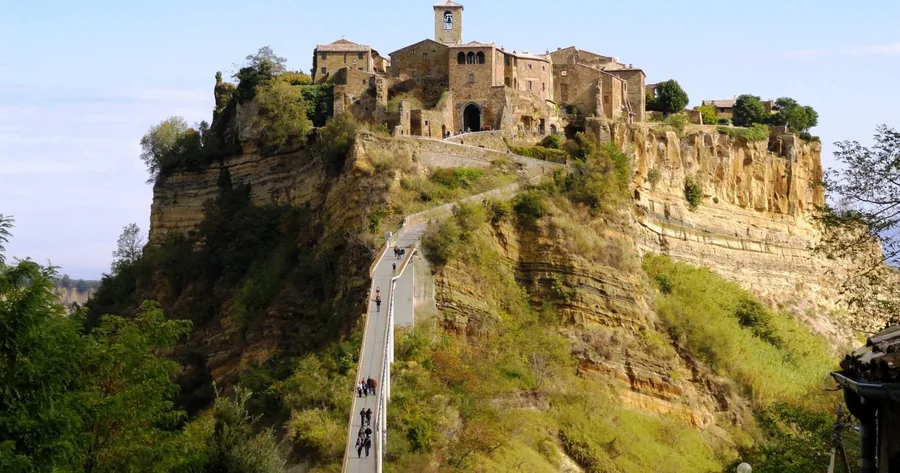
The village on the edge.
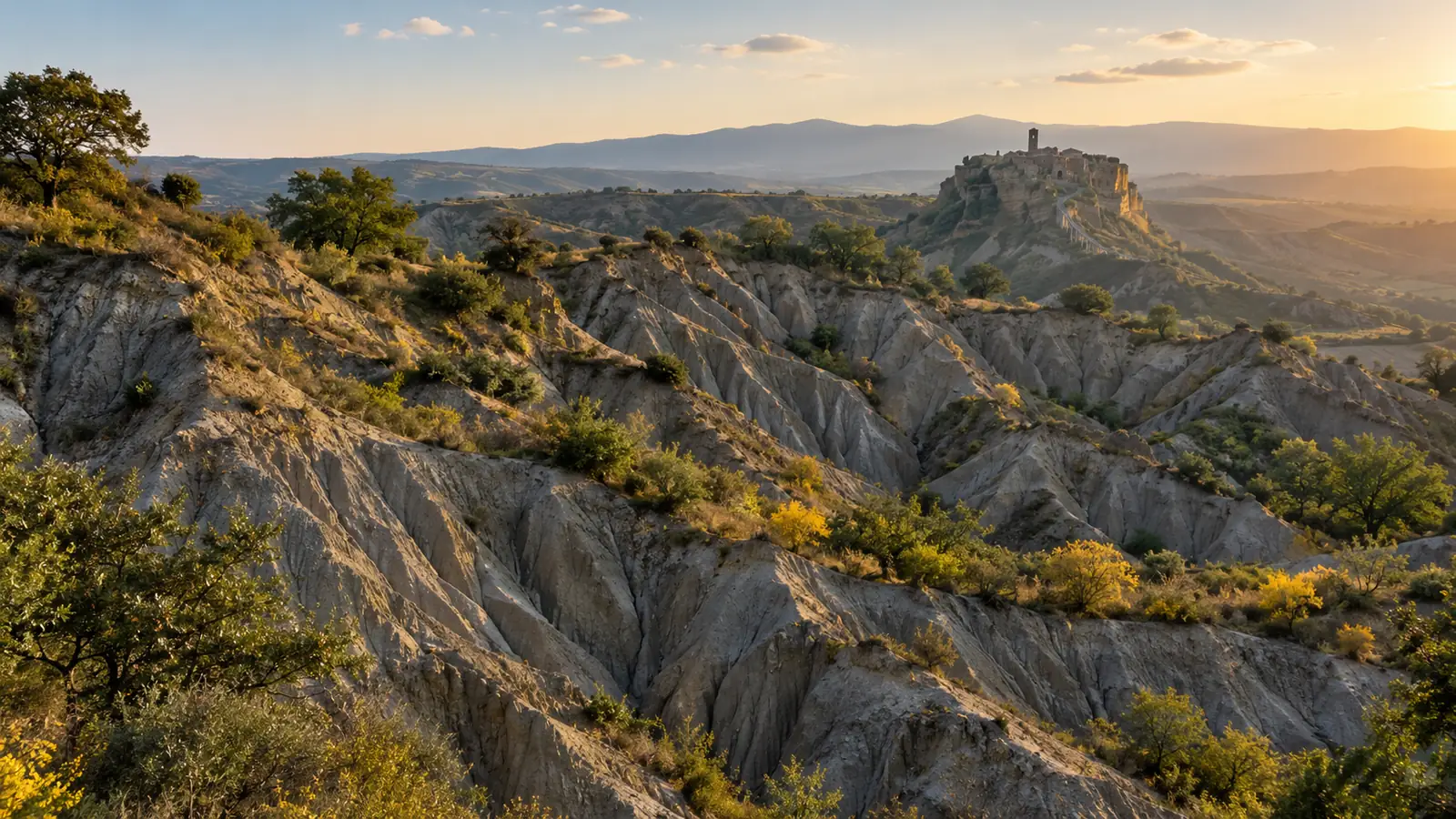
Civita di Bagnoregio sits on a pinnacle of volcanic tuff over the grey clay badlands of the Valle dei Calanchi, between
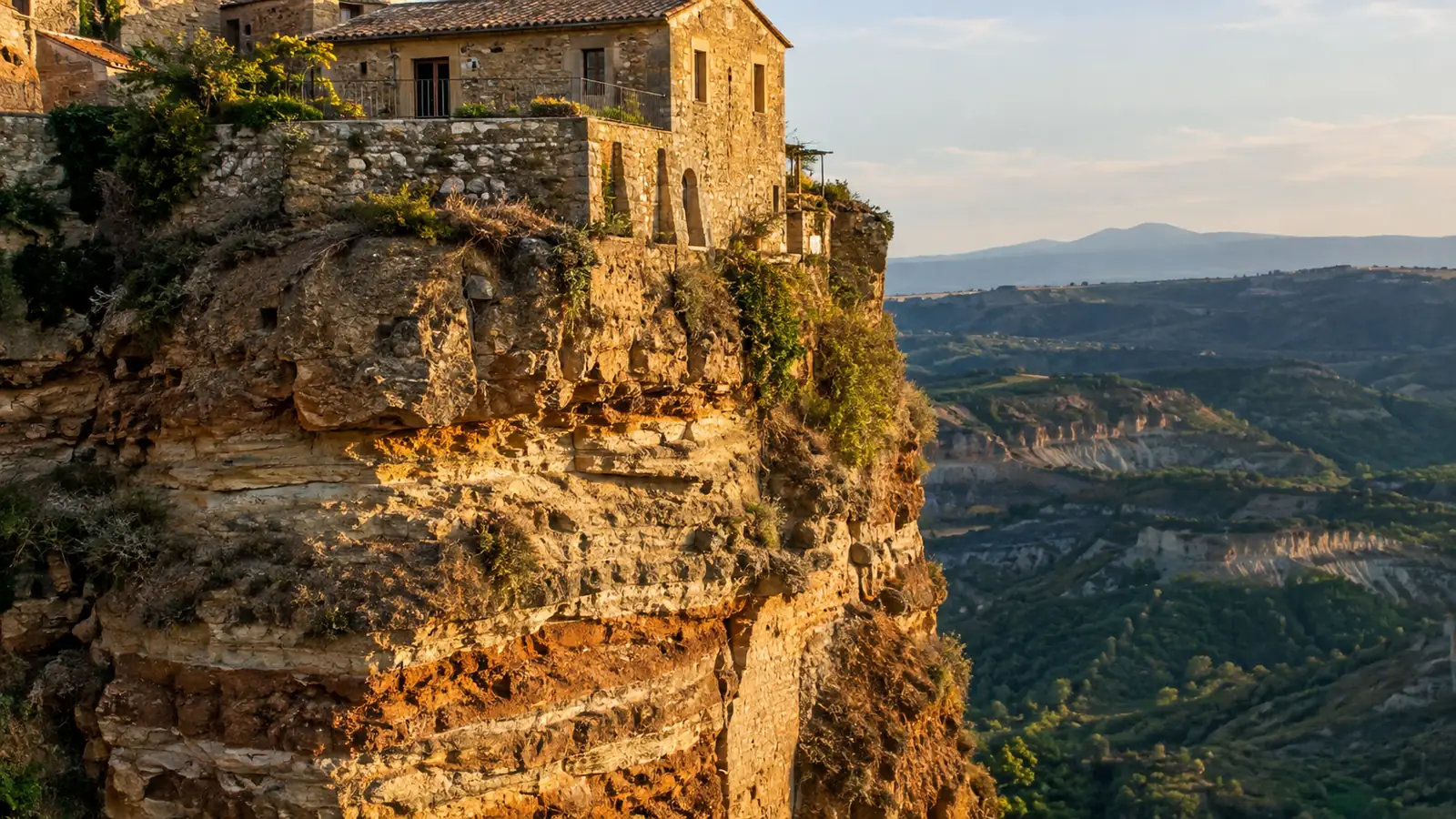
Orvieto and Lake Bolsena. The Etruscans founded it; the rain and the wind have been taking it back ever since. Houses at the
rim have fallen into the valley, which is why Italians call it la città che muore, the dying city.
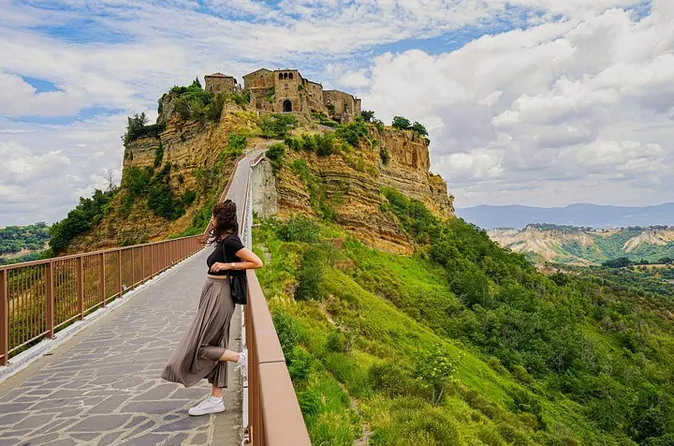
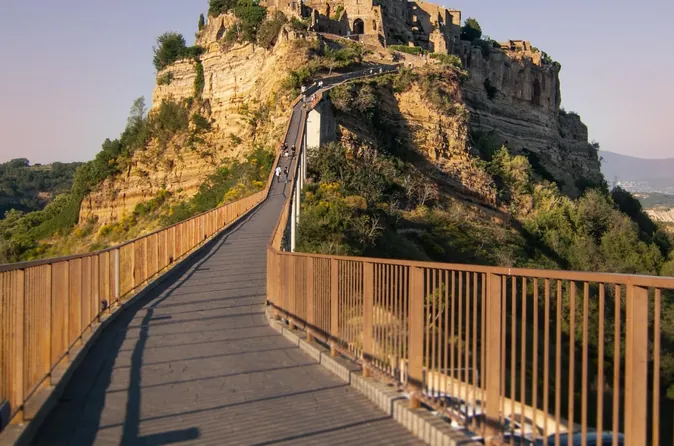
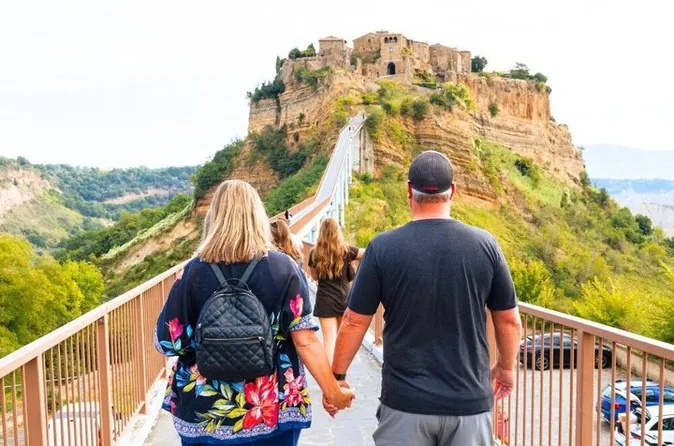
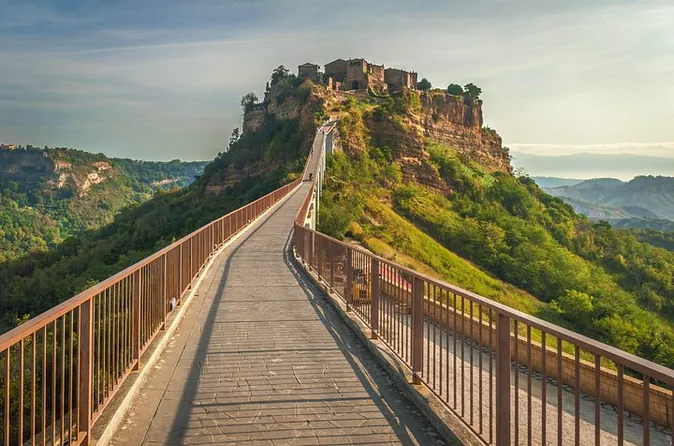
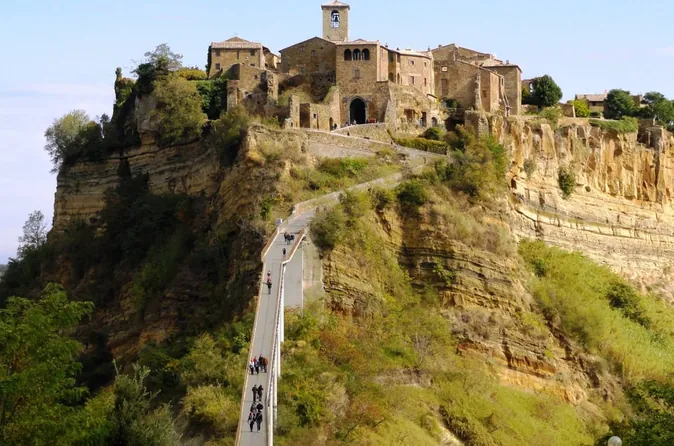
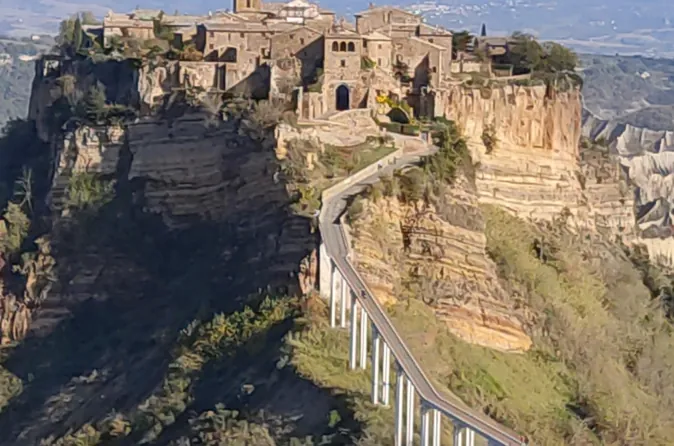
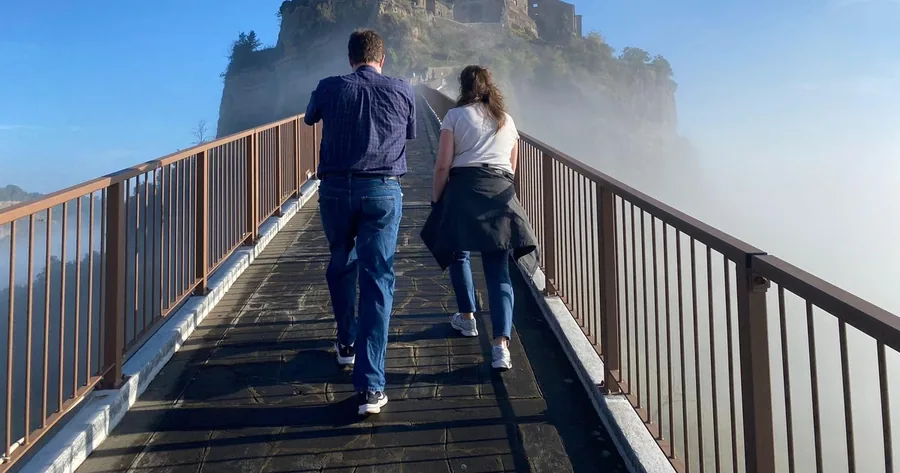
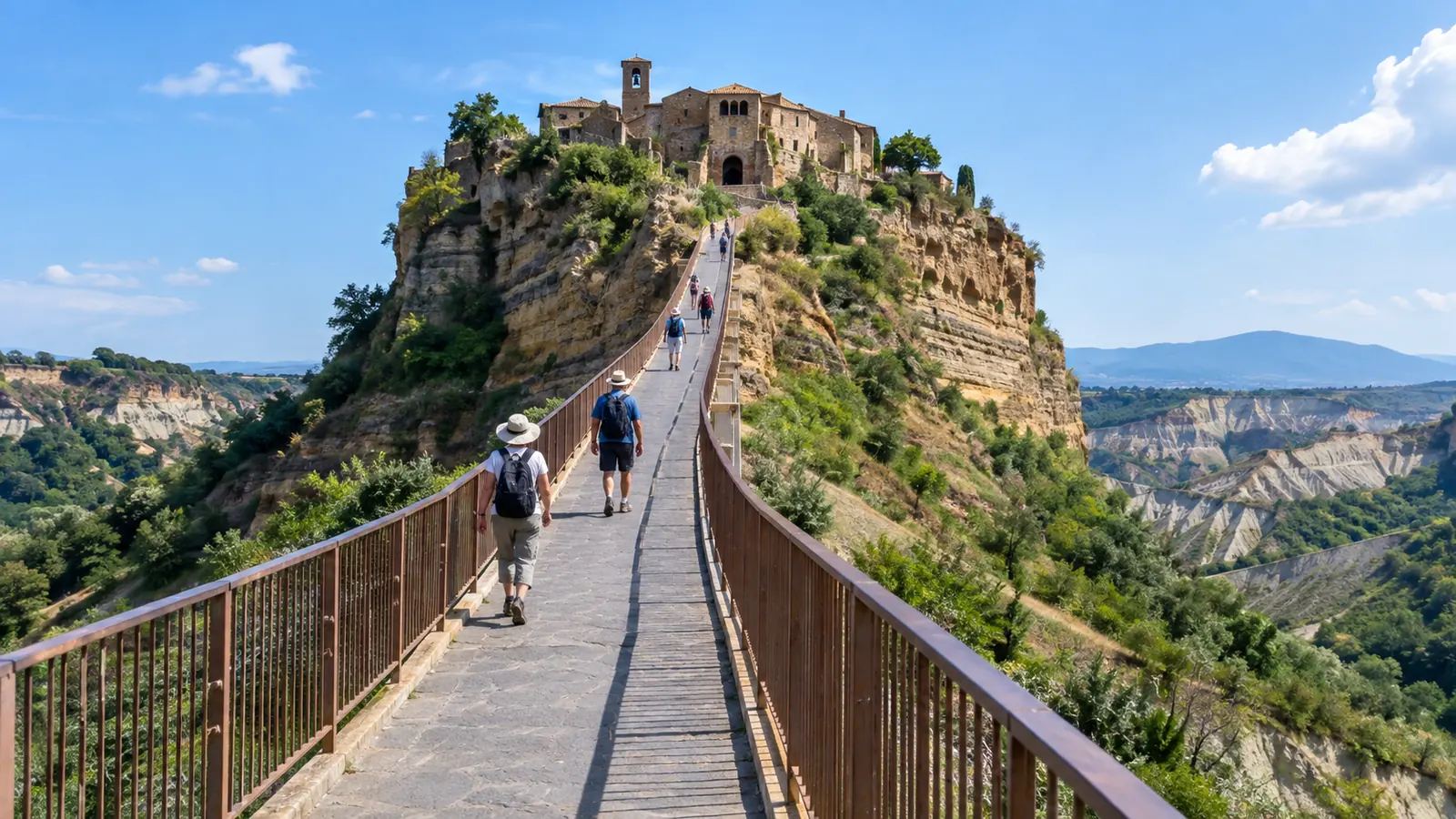
Since 1965 the only way in has been a pedestrian footbridge from Bagnoregio, about 300 metres long and steep at the end.
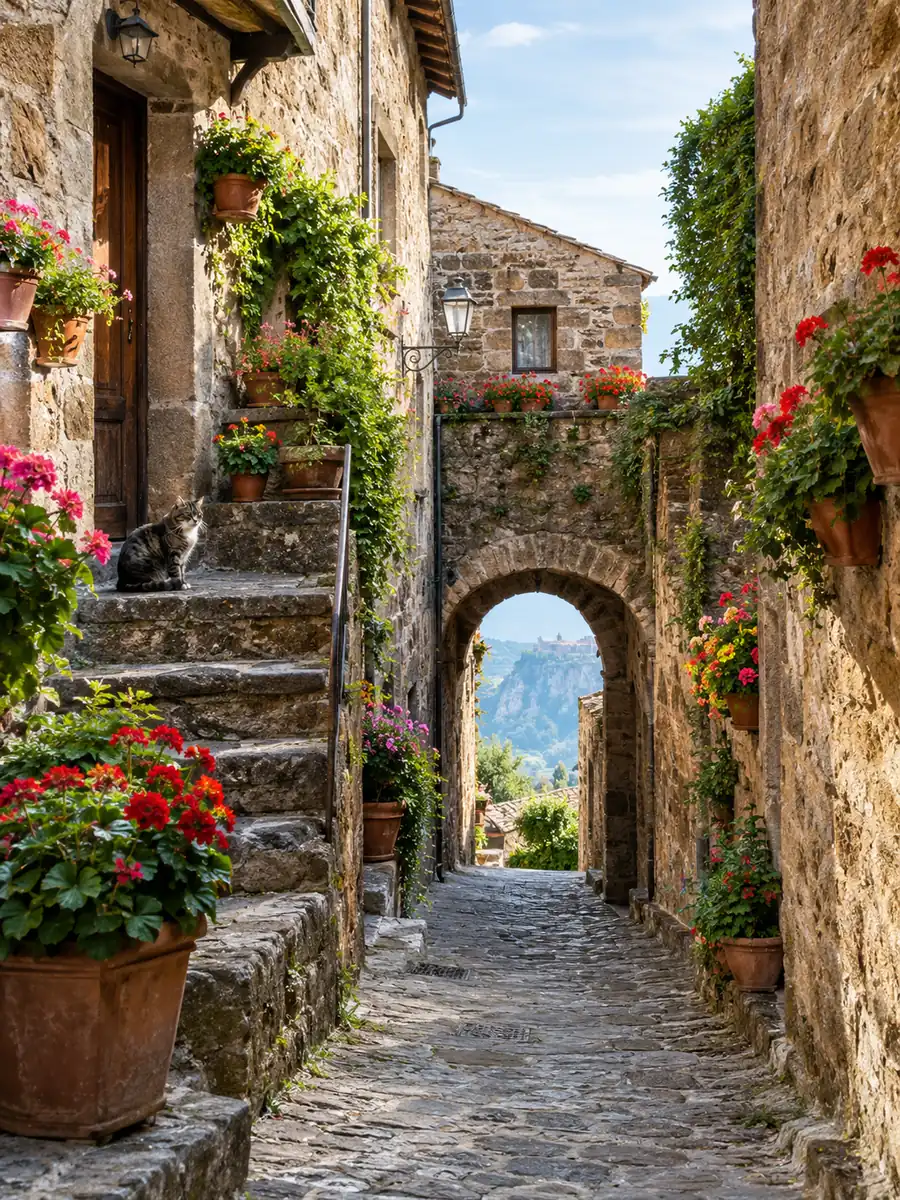
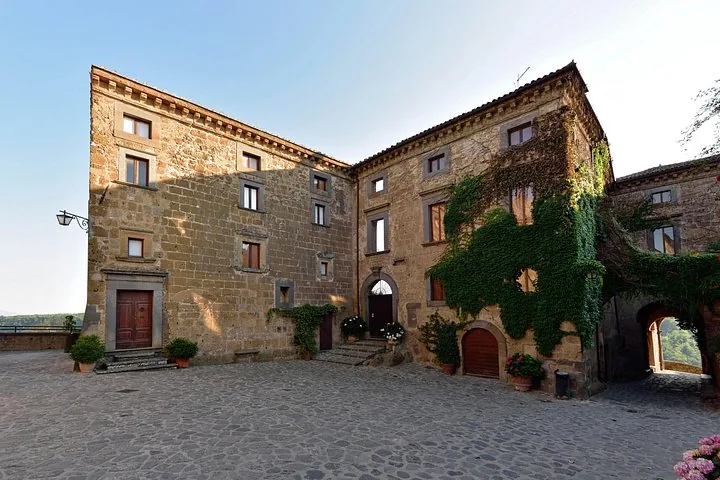
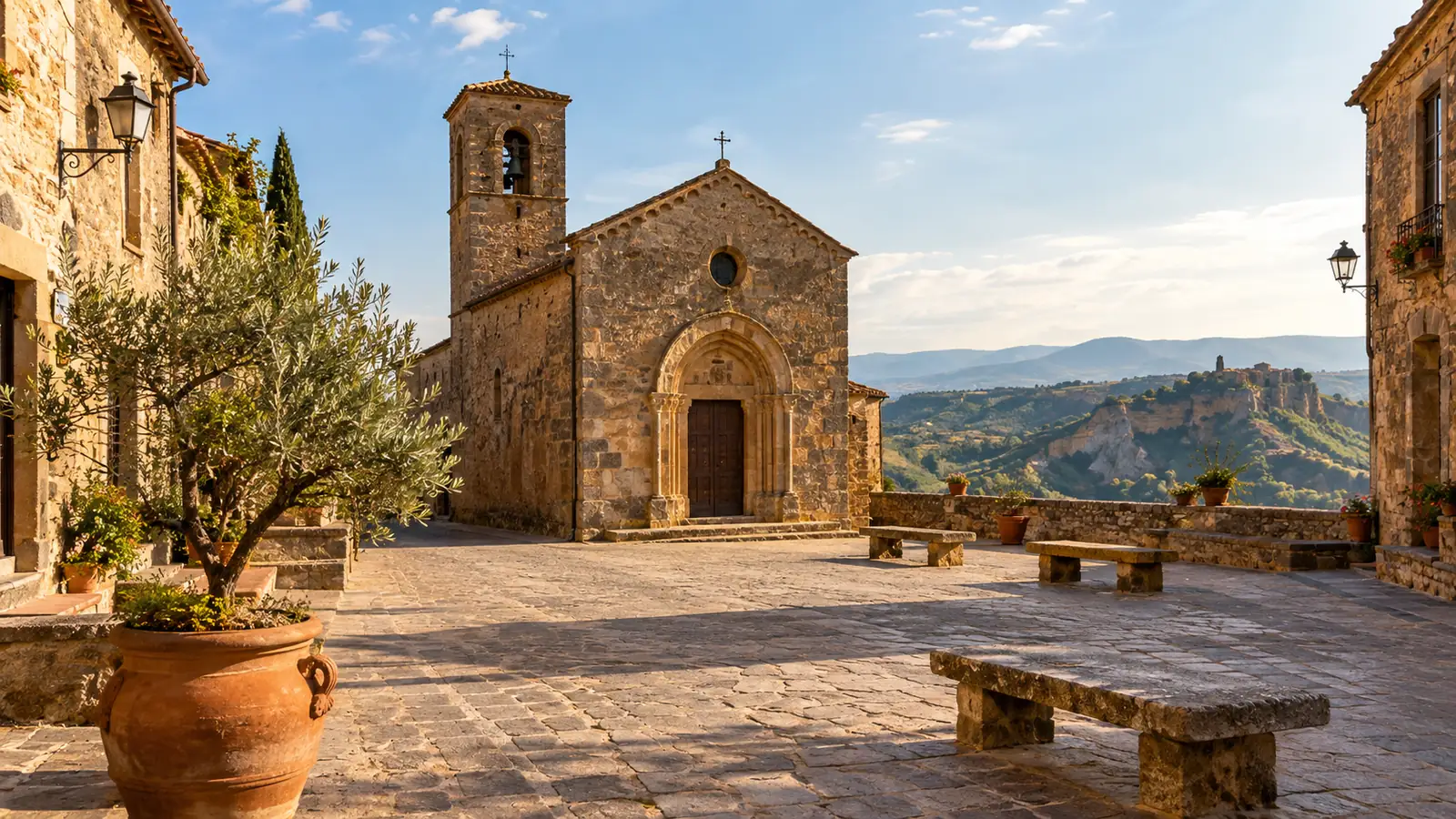
Inside are a single square with the church of San Donato, a few lanes of stone houses, Etruscan caves, small restaurants and
views on every side. About a dozen people live there all year; hundreds of thousands visit.
€5
The entry ticket, paid to the town of Bagnoregio. It funds the upkeep of the
bridge and the village. Children under 6 go in free.
FootbridgeSan DonatoEtruscan cavesBelvedere
Inside, the village takes about ten minutes to cross.
01
How long?
Two to three hours in Civita; a full day with Orvieto.
02
How steep?
A 300-metre footbridge with a steep last stretch. Wear real shoes.
03
Car or tour?
No train goes there. From Rome a tour is simplest.
04
Refunds?
Every tour here cancels free up to 24 hours before.
Your visit
How a visit runs
Whether you come by coach, car or bus, the last part is the same: through Bagnoregio, then across the bridge on foot.
01
To Bagnoregio
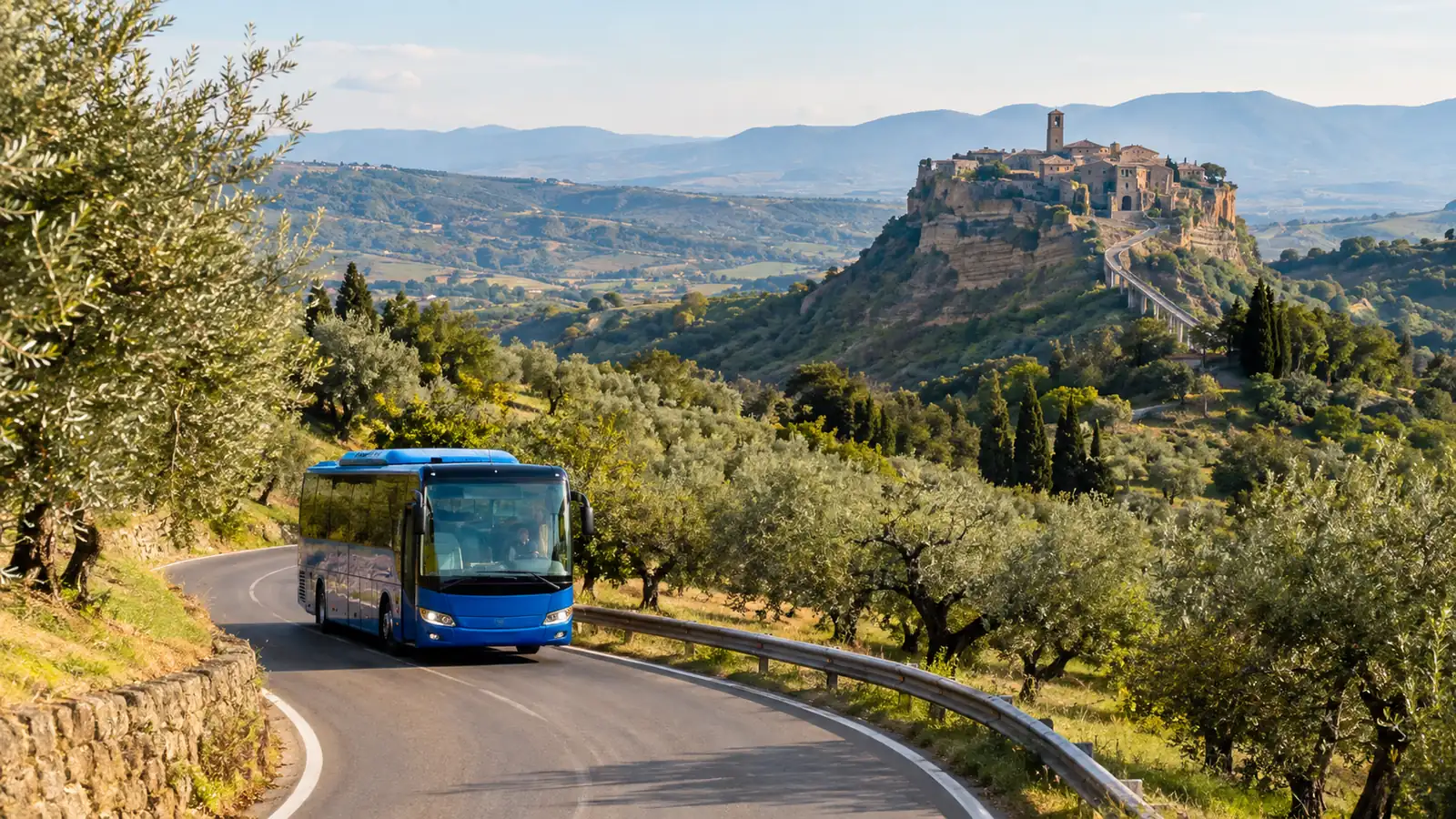
Coach from Rome, car via the A1 Orvieto exit, or the COTRAL bus from Orvieto station.
45 min to 2 hours
02
To the belvedere
Walk through Bagnoregio or take the shuttle to the viewpoint and ticket office.
5 to 15 minutes
03
Over the bridge
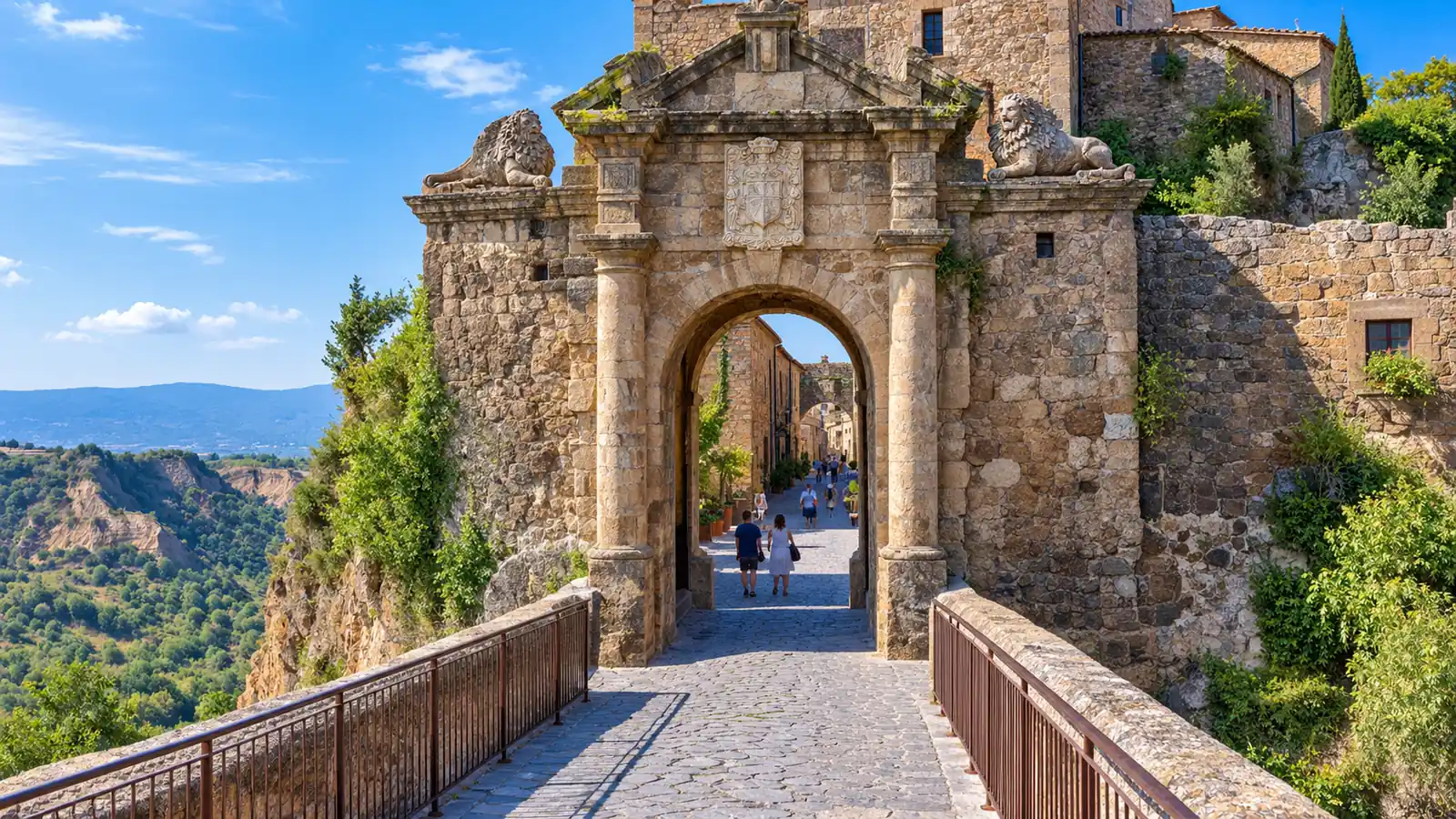
Show the €5 ticket and climb the footbridge to the Porta Santa Maria gate.
10 to 15 minutes
04
The village
The square, the lanes, the caves and the views over the calanchi.
Wear shoes with grip: the bridge is steep and the lanes are worn stone.
There is little shade on the bridge; bring water in summer.
Parking in Bagnoregio is paid; the lots near the belvedere fill first.
Civita is car-free. Only residents' small vehicles cross the bridge.
Ticket€5Per person; under 6 free.
BridgeAbout 300 mPedestrians only, steep at the top.
RomeAbout 2 hoursBy coach or car; no direct train.
OrvietoAbout 30 minutesThe usual partner on a day trip.
Time2 to 3 hoursEnough for the village at an easy pace.
Refund24 hoursFree cancellation on every tour here.
Where it is
Between Orvieto and Lake Bolsena
Bagnoregio, province of Viterbo
Civita di Bagnoregio, 01022 Bagnoregio (VT), Lazio
Civita is a hamlet of Bagnoregio, a small town in northern Lazio near the border with Umbria. You reach Bagnoregio first,
by road; Civita is the separate rock at its edge, joined to it only by the footbridge. Orvieto, with its railway station, is
the nearest big town.
Our guide, Chiara, was absolutely wonderful! So knowledgeable and friendly. She was kind and thoughtful and shared useful information making the whole day a wonderful experience.
★★★★★
Our driver Alex Paolini helped us move our visiting time 1 hour earlier to avoid the summer heat. We enjoyed the views of the country side from the car as well.
★★★★★
The walk to Civita was strenuous. The guide warned the group in advance, and that was very much appreciated.
Next door
Then Orvieto, underground
Orvieto stands on the same volcanic tuff, half an hour away. If you are there anyway, go below it.
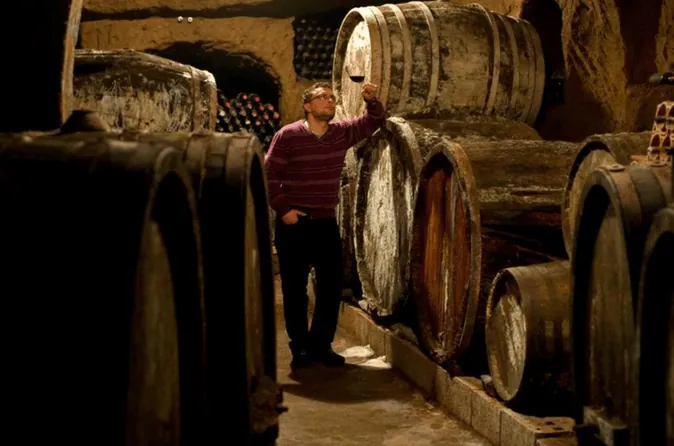
Orvieto sits on the same volcanic tuff as Civita, and its cellars are carved into it. This hour in a cellar on the cathedral square pairs three wines, including a sweet Vin Santo, with local cured meats and cheese.
Civita looks unreal in photos, and it is not much less strange in person. It is also small, steep and hard to
reach without a car. Here is how to see it well.
What you see
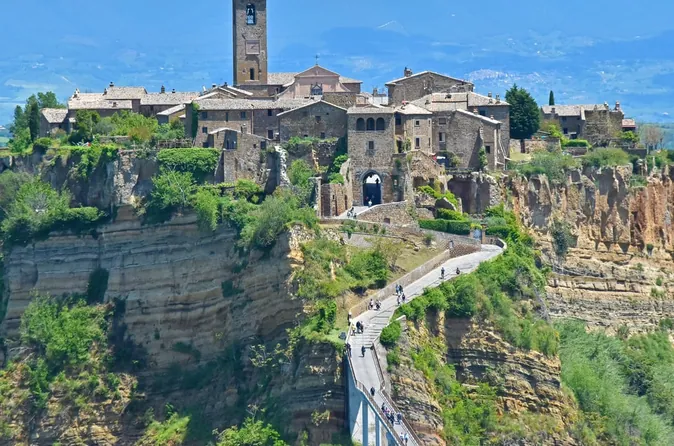
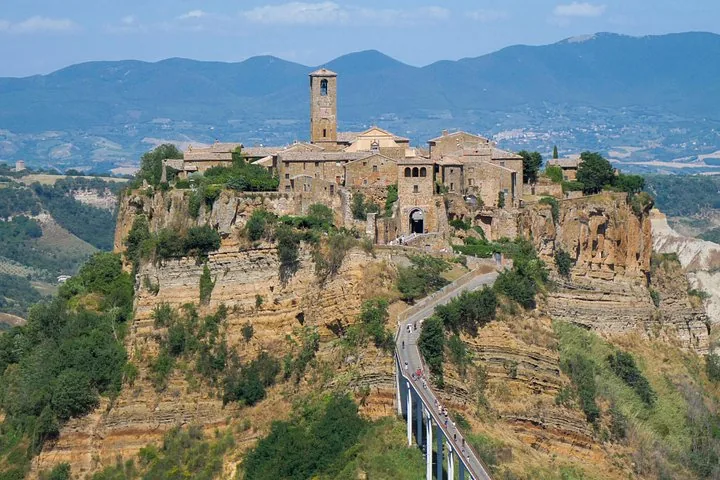
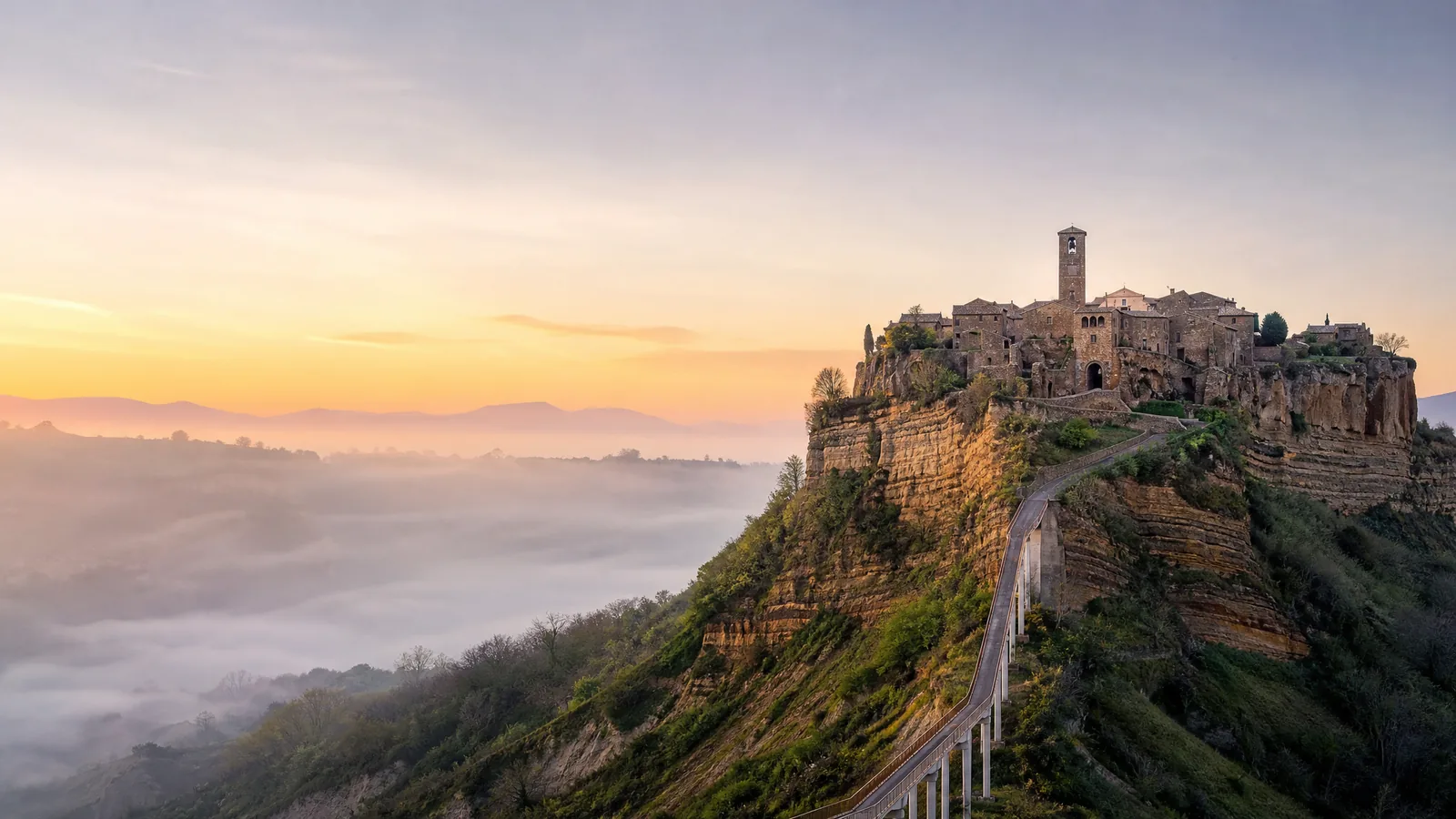
From the belvedere in Bagnoregio, the whole village appears on its rock, with the footbridge running up to it across the
grey clay ridges of the calanchi. Cross, and you enter through the Porta Santa Maria gate into a handful of lanes around the
square, where the church of San Donato faces a row of medieval houses. Beyond them are Etruscan caves cut into the tuff, a
small geology and landslide museum, gardens and cellars, and the edge where the rock simply stops.
There is not a long list of sights. The point is the place itself: the silence once the day-trippers leave, the views on
every side, and the sense that it may not be there forever.
The footbridge is the only way in, and the last part is steep.
Which tour
From Rome, a guided day trip is the easy answer, because public transport needs a train and a bus that does not run on Sundays. The
most booked trip pairs Civita with Orvieto and a farmhouse lunch; the
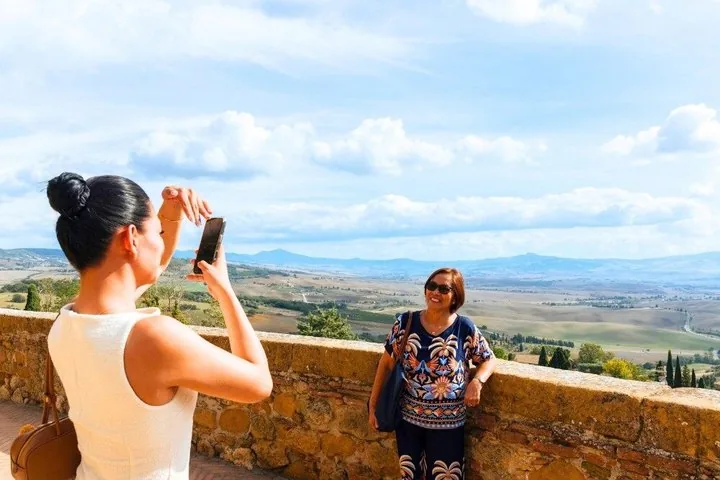
Tuscany version swaps Orvieto for Montepulciano and Pienza. If you want your own timetable, a
private driver costs more but sets off when you like. With a car, all you need is the €5 ticket, and
perhaps a local guide for the stories.
The honest small print: the €5 entry ticket is sold by the town itself, and online platforms charge
more for the same entry. Tours from Rome are long days with a lot of coach time and a steep walk in the
middle. And many of them give you about two hours in Civita, which is enough, but not a minute more.
Civita and Orvieto
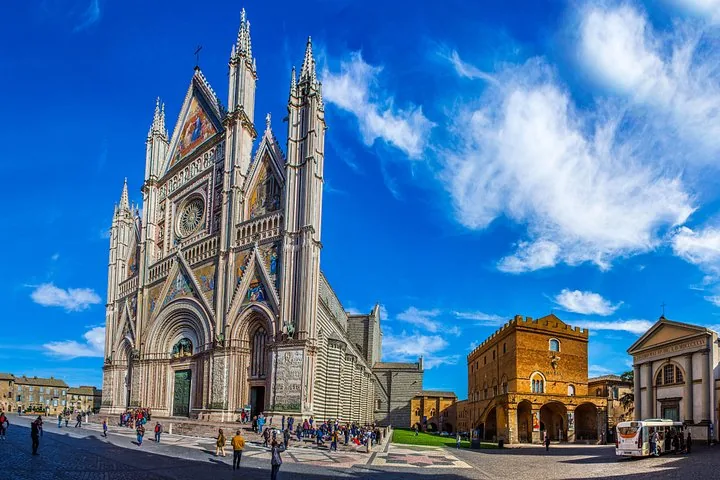
Orvieto is the natural partner: half an hour away, with a railway station, a Gothic cathedral with a striped facade and
a city of caves under its streets. Most day trips do both, Civita in the cooler morning and Orvieto after lunch. Staying the
night in Orvieto and visiting Civita early the next morning is the calmest way to do it.
Orvieto's cathedral, the usual second stop.
Timing it
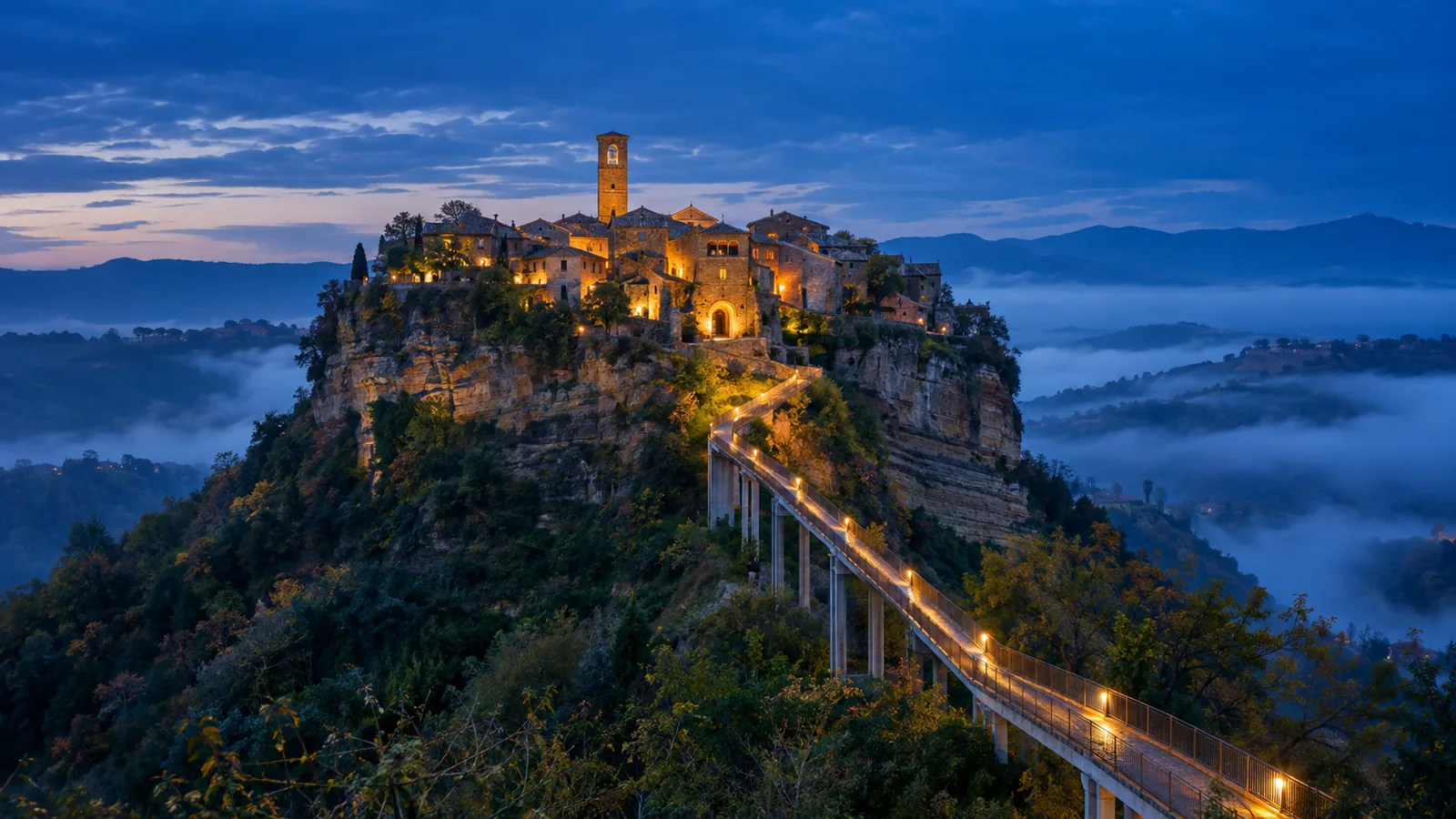
Spring and autumn are best, on a weekday. Come early, before the coaches arrive late in the morning, or late in the
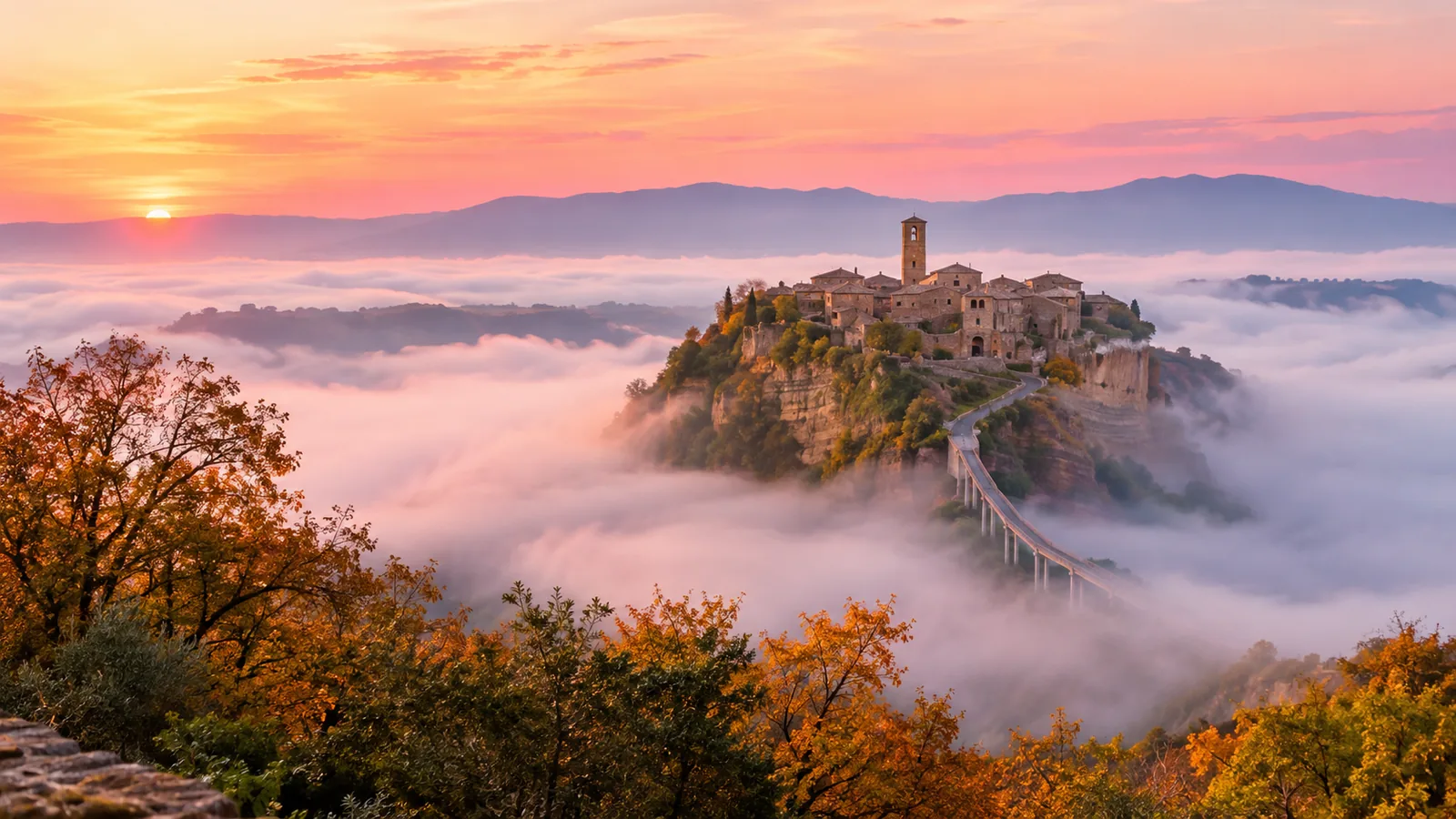
afternoon when they have gone. Autumn and winter mornings often bring fog that fills the valley and leaves the village
floating above it. Summer is hot on the bridge, and weekends in July and August are crowded. Our
best time guide goes month by month.
Straight answers to what people ask most about Civita di Bagnoregio.
How much does it cost to enter Civita di Bagnoregio?
€5 per person, paid to the town of Bagnoregio online or at the ticket office before the footbridge. Children under 6 go in free. Some tours from Rome include it and some do not, so check your voucher. The ticket guide covers who else is free and where to buy.
Can you visit Civita di Bagnoregio as a day trip from Rome?
Yes. It is about 120 km north of Rome, roughly two hours by car or coach. Guided day trips start at about $100 and usually add Orvieto or Tuscany. On your own it means a train to Orvieto and a COTRAL bus. See Civita from Rome.
How do you get to Civita di Bagnoregio by public transport?
There is no train. Take a train to Orvieto, then a COTRAL bus to Bagnoregio (30 to 50 minutes, about nine runs on weekdays and none on Sundays and holidays), then walk or ride the shuttle to the footbridge. See getting there.
How long is the bridge to Civita di Bagnoregio?
About 300 metres, and the last stretch is steep. It is the only way in: no cars cross. Most people take 10 to 15 minutes to walk up. See the bridge and accessibility.
Is Civita di Bagnoregio wheelchair accessible?
Not really. The footbridge is steep and the lanes inside are uneven stone. Strong pushers manage strollers; most wheelchair users will find it very hard without help. The guide on the bridge has the details.
How long do you need in Civita di Bagnoregio?
Two to three hours is enough to cross the bridge, walk every lane and sit at the belvedere. Most tours give you about two.
When is the best time to visit Civita di Bagnoregio?
Weekdays in spring and autumn, early in the morning or late in the afternoon. Autumn mornings often bring fog in the valley, with the village above it. Summer weekends are crowded and hot. See best time.
Why is Civita called the dying city?
Because the tuff and clay under it keep eroding and sliding into the Valle dei Calanchi, taking houses with them. Only about a dozen people still live there all year.
Is Civita di Bagnoregio a UNESCO site?
Not yet. Italy put forward the "Cultural Landscape of Civita di Bagnoregio" on its Tentative List in 2017 and pushed the candidacy in 2021; it is not on the World Heritage List.
Can I combine Civita and Orvieto in one day?
Yes, and most tours do. Orvieto is about 20 km away, around half an hour by car, with its cathedral and underground caves. The day trip from Rome does both.
Can I cancel tours booked on this site?
Every tour and ticket listed here cancels for a full refund up to 24 hours before. Check each listing at checkout.
Ready to book
Pick your tour, pick your day.
Free cancellation up to 24 hours before on every tour here.
 Three towns
★ 4.714 hoursFree cancellation