Booking choice: The private walking tour, from $203 for 1 adult, total varies by group. Check dates Tour details
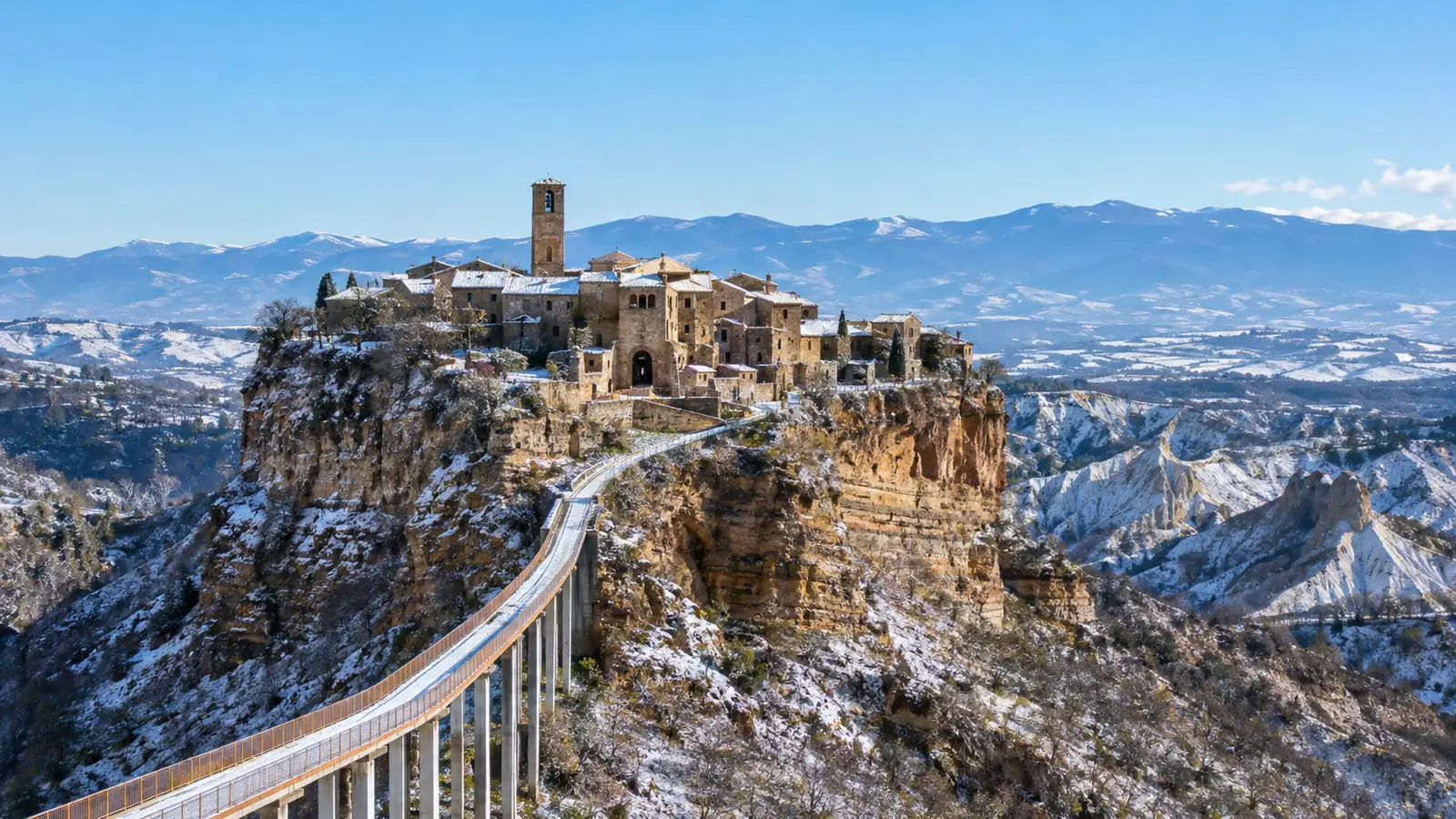
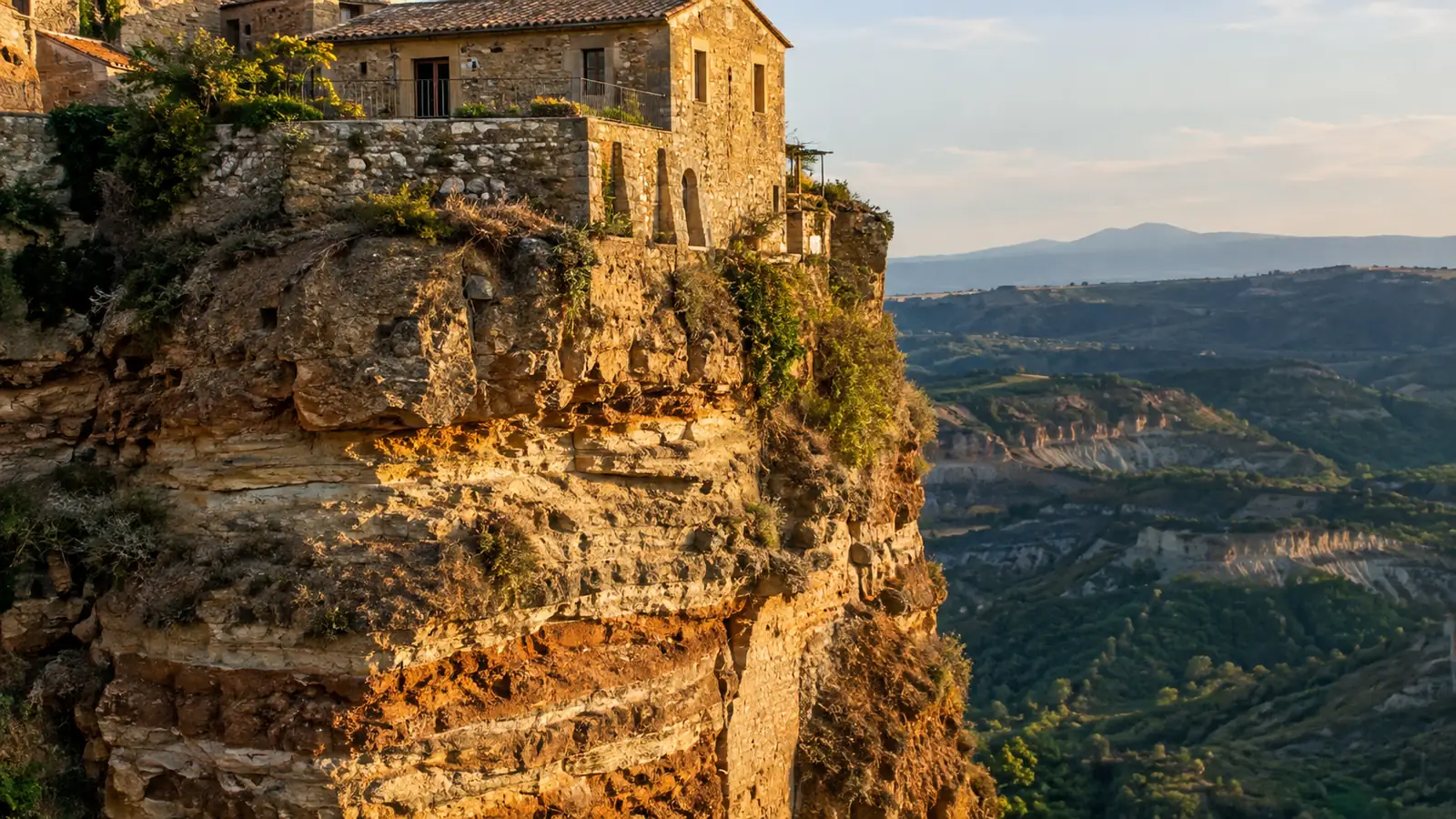
Civita sits on a cap of volcanic tuff over a base of clay. Rain and frost loosen the tuff, water softens the clay, and pieces of the edge slide into the Valle dei Calanchi. Records of landslides and repairs go back to 1373, the UNESCO file on the site says, and the town lost whole streets over the centuries.
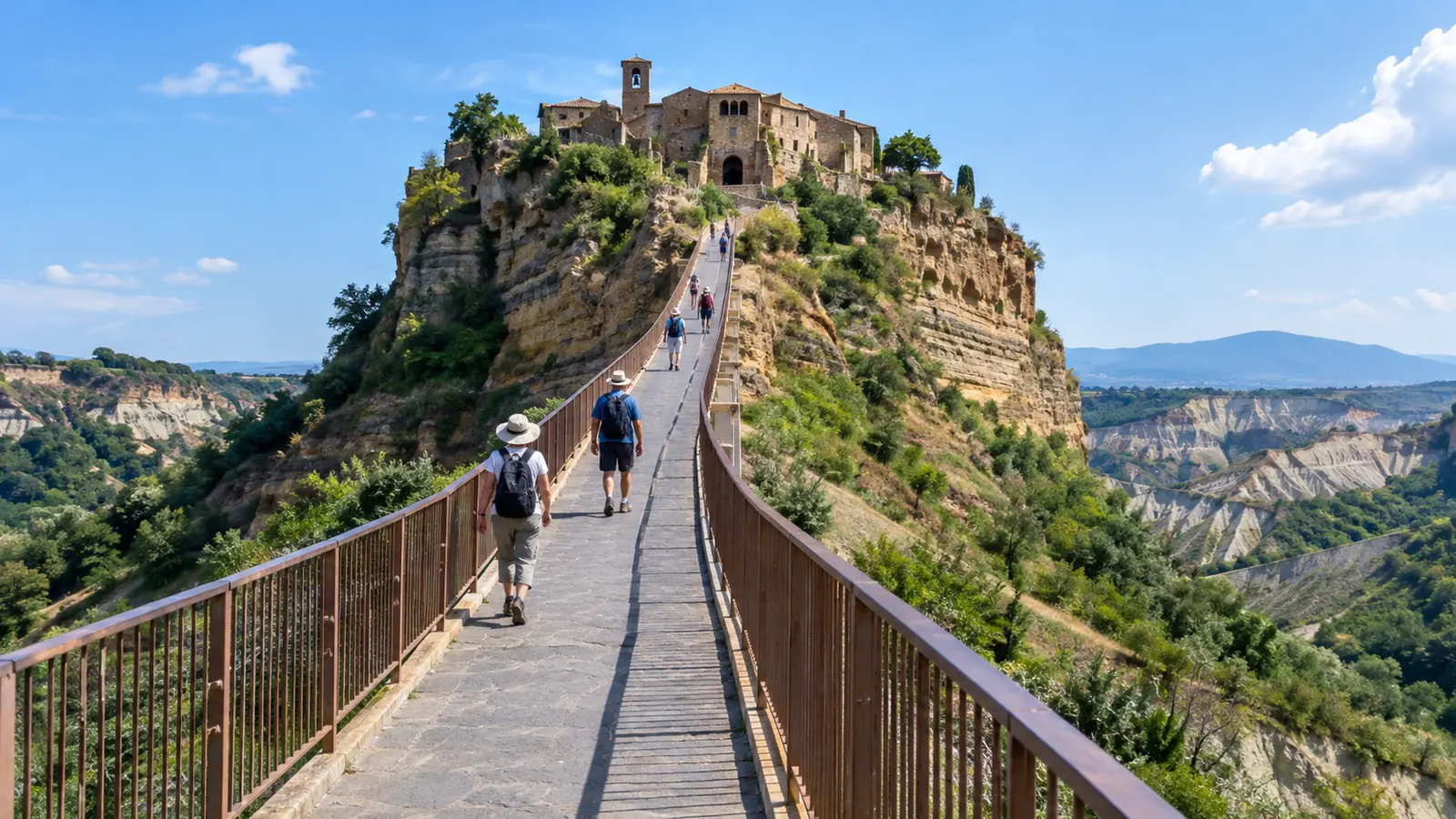
For a visitor in 2026 none of this closes anything. The village and the footbridge are open, and the ticket is €5. What changed this year is the money, the studies at the bridge, and a clearer picture of how stuck the UNESCO bid is.
The quick answer
Civita is open as normal. In 2026 the town's scientific committee pointed to the Civita end of the footbridge as the area with the most collapses in 2016-2022, and a €3 million government grant is paying for the studies and the works to secure it; no construction start date has been published. Civita is on Italy's UNESCO Tentative List and its full nomination was filed in 2021, but it is not a World Heritage Site.
Why is Civita di Bagnoregio still eroding?
Because the soft clay under the tuff keeps washing out, and the tuff edges above it break away; wet winters speed it up.
Roberto Troncarelli, the national president of Italy's geologists, put it plainly in a 2026 interview: the village "is giving signs of small subsidence", because "water eats the clay base and the tuff part on top, where the houses are, risks sliding down". That is the mechanism that gave Civita its nickname.
The winter of 2025-26 did not help. After exceptional rain in January 2026, when Bagnoregio had roughly a third of its average annual total in a single month, the comune and its geologists confirmed landslides and floods across the province of Viterbo in a statement reported by ViterboToday. They also stressed that Civita is one of the most monitored and studied sites of its kind in Italy, which is the point: the risk is known, measured and managed, not ignored.
| Year | Event | Source |
|---|---|---|
| 1373 | First records of landslides and repairs | UNESCO Tentative List |
| 1695 | Earthquake and a major landslide; the bishop and town hall move to Bagnoregio | UNESCO file, Wikipedia |
| 1965 | The concrete footbridge is built, the only way in | Wikipedia |
| 2015 | €1.19 million regional works on the Mercatello slope below the access road | RomaToday |
| 2021 | Scientific committee set up to advise the comune | ViterboToday |
| January 2026 | About a third of the annual rainfall in one month | Comune di Bagnoregio |
What works are planned at Civita's footbridge?
A €3 million project to secure the Civita end of the bridge, where collapses clustered in 2016-2022; studies are under way and no build date is set.
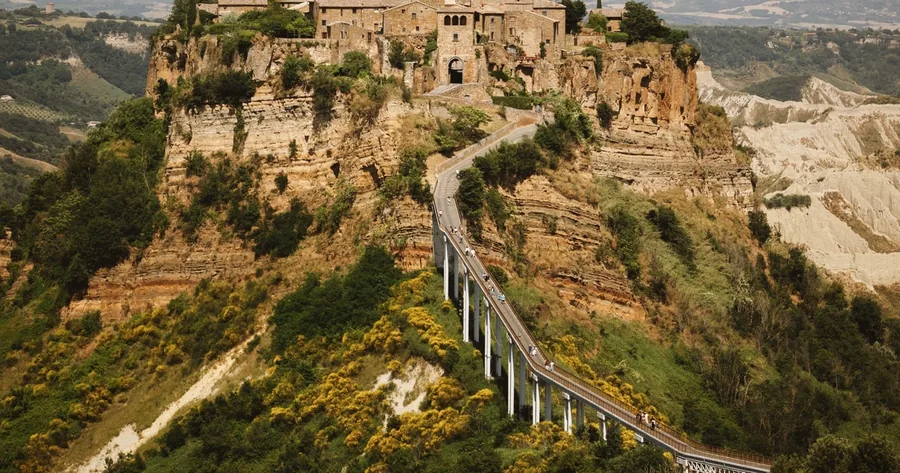
The town's technical-scientific committee, coordinated by the geologist Claudio Margottini, studied where the rock was failing. It found "a significant concentration of collapses and mudflows" between 2016 and 2022 in the area where the bridge lands on the Civita side. The comune took that to the government in 2024, and the Jubilee 2025 commissioner granted €3 million for consolidating and securing the access to Civita.
In February 2026 the comune said the investigations and studies needed for the final design were in progress, with machines on site. In September 2026 the local MP Mauro Rotelli referred to the "upcoming" €3 million works on the village and the bridge, in a ViterboToday report. No start date, duration or closure plan has been published. If the works need the bridge shut for a period, the town will have to announce it; we will add it to our bridge guide the day it does.
What is changing at the Bagnoregio belvedere?
A €1.1 million makeover of the area by the viewpoint, with works due to start in spring 2027 and finish by the end of 2028.
The other project you will notice is on the Bagnoregio side. The Ministry of Culture gave the town €1.1 million, linked to its bid to be Italian Capital of Culture, and the money goes to the site of the old 1970s cantina building next to the belvedere, which has been demolished. The plan, as ViterboToday described it in September 2026, is a pedestrian square facing Civita with a stage for events, a play area and fitness corner, new pavements on an 800-metre stretch of road and a reorganised two-way traffic layout.
Works are split into two lots and should start in spring 2027, with a deadline of 31 December 2028. Expect hoarding and some traffic changes near the viewpoint during that time. The view itself is not going anywhere.
| Project | Money | Status, October 2026 |
|---|---|---|
| Securing the Civita end of the footbridge | €3 million (Jubilee 2025 funds) | Studies for final design under way; no start date |
| Belvedere square, pavements and traffic | €1.1 million (Ministry of Culture) | Due to start spring 2027, finish by end 2028 |
| Monitoring by the scientific committee | Volunteer experts | Ongoing since 2021 |
Is Civita di Bagnoregio a UNESCO World Heritage Site?
No. It has been on Italy's Tentative List since 2017, and the 2021 nomination has never received a decision.
Italy added "The Cultural Landscape of Civita di Bagnoregio" to its Tentative List on 31 January 2017, under criteria (iii) and (v). In January 2021 the culture ministry chose it as Italy's candidate for the World Heritage Committee's 2022 session, and the dossier reached Paris on 25 January 2021. ICOMOS, UNESCO's advisory body, sent an inspector in October 2021, according to the Casa Civita foundation.
Then the 2022 session, planned for Kazan in Russia, was postponed after the invasion of Ukraine, and Civita's bid froze with it. In October 2026 UNESCO's own page for Italy lists 62 inscribed properties, and Civita is still on the Tentative List, not among them. We found no decision on the nomination from any later Committee session. Any site that tells you Civita is a World Heritage Site is wrong.
| Date | UNESCO step | Outcome |
|---|---|---|
| 31 January 2017 | Added to Italy's Tentative List | Still listed |
| 20 January 2021 | Chosen as Italy's nomination for 2022 | Approved nationally |
| 25 January 2021 | Dossier delivered to the World Heritage Centre | Passed the completeness check |
| October 2021 | ICOMOS site inspection | Completed |
| June 2022 | Kazan Committee session | Postponed; no decision on Civita |
| October 2026 | Current status | Candidate, not inscribed |
Does any of this affect a visit now?
Not today: the village and the bridge are open. The best way to understand the erosion is to see it with someone who knows the rock.
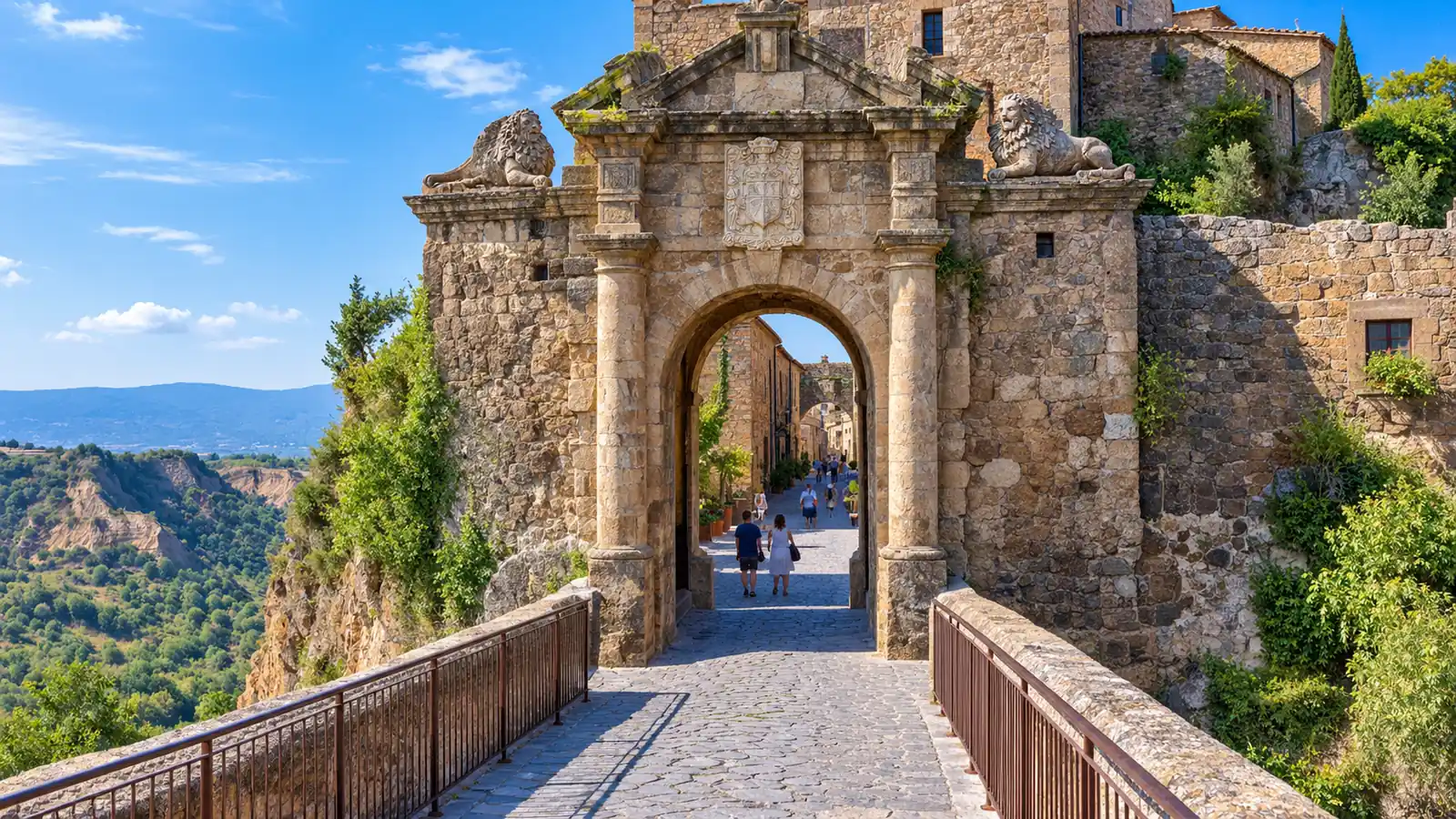
Nothing announced by October 2026 closes Civita or the bridge. Check the town's site before travel in 2027, when the bridge works and the belvedere works could overlap. Inside the village, the Belvedere at the far end and the edges around Piazza San Donato show you how little rock is left, and the geology and landslide museum in Palazzo Alemanni explains it. Our what to see guide lists the stops.
A private walking tour with a local guide spends three hours in the village rather than the hour or two on a coach trip, which is enough to cover the caves, the edges and the history of the slides. The listed from-price, about $203, is for one adult; check the total for your group size before you book.
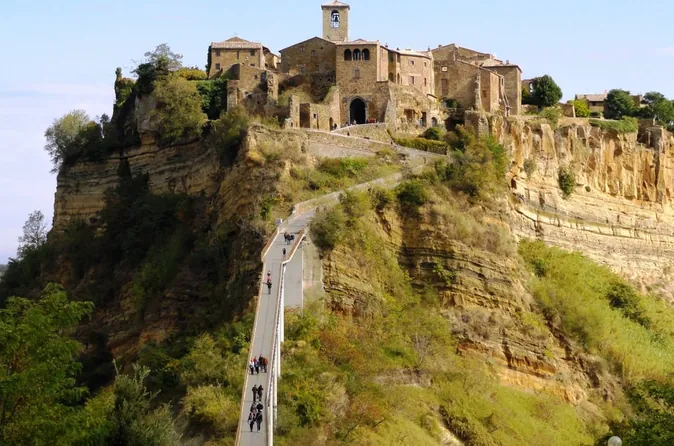
Three hours in Civita with a local guide, just for your group. Starts at Caffe Belvedere in Bagnoregio.
Check dates Tour detailsFrequently asked questions
Is Civita di Bagnoregio a UNESCO site?
No. It is on Italy's Tentative List since 2017 and was nominated in 2021, but the World Heritage Committee has not decided on it and it is not inscribed.
Is Civita di Bagnoregio going to collapse?
Parts of the edge keep falling, slowly, as they have for centuries. The village is closely monitored, and €3 million is set aside to secure the end of the footbridge.
Is the bridge to Civita closed for works in 2026?
No. By October 2026 only studies had started. No start date or closure for the €3 million works has been announced.
Why is Civita called the dying city?
Because erosion of the clay and tuff under it keeps taking houses and streets, and only about a dozen people still live there all year.
Ready to book
Book your visit
Free cancellation up to 24 hours before on every option. Prices are from-prices in USD and move with the season.
Civita di Bagnoregio Private Walking Tour
A local guide in Civita when you arrive by car
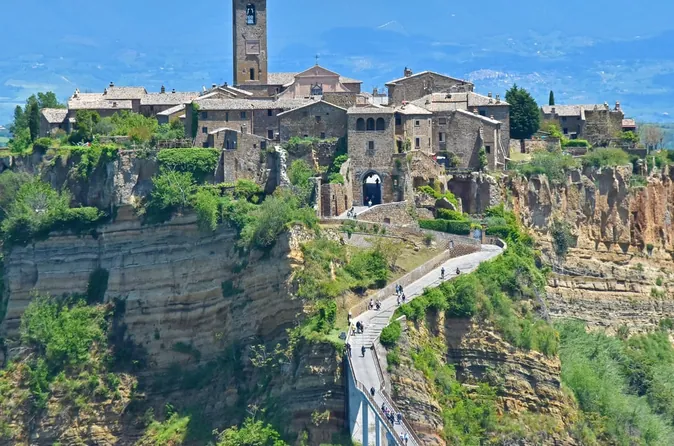
Skip-the-Line Ticket to Civita di Bagnoregio
Arriving on your own, ticket ready on your phone
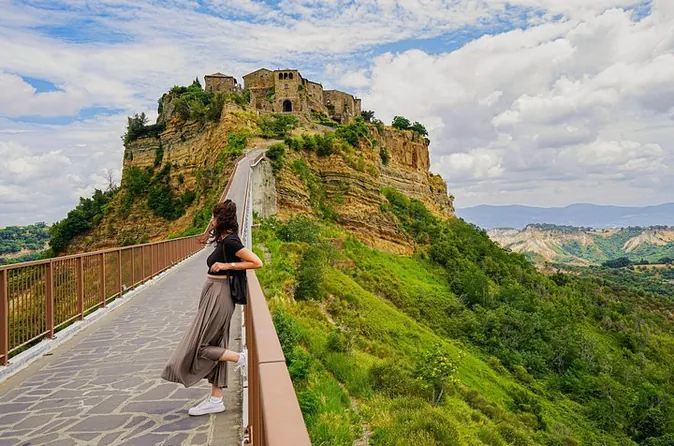
Civita & Orvieto Day Trip from Rome with Wine Lunch
- Coach from Rome and back, with a guide all day
- About 2 hours in Civita di Bagnoregio
- Three-course farmhouse lunch with five wines